Jerome Baldwin House (1885)

Jerome B. Baldwin was a merchant in Willimantic. Born in Mansfield in 1843, he served in the Twenty-First Connecticut Infantry Regiment during the Civil War. Baldwin was partner with Frank F. Webb in the Baldwin & Webb clothing and furniture store in Willimantic and served in the state legislature in 1885. His house, on Prospect Street in Willimantic, was also built in 1885 and is an example of the Stick style.

Joseph Dwight Chaffee House (1889)

In 1889, Joseph Dwight Chaffee bought what was considered to be the most desirable lot in Willimantic and built an impressive Queen Anne house on the property. As stated in The Chaffee Genealogy (1909), Joseph Dwight Chaffee

was born in Mansfield, Conn., August 9, 1846, and married there, September 12, 1867, Martha W., daughter of George P. Armstrong of that place. Mr. Chaffee has served in the Connecticut Legislature as Representative and also as Senator from the Twenty-Fourth District. He has been associated with his father in the business of manufacture of silk under the firm name of O. S. Chaffee & Son, later called the Natchaug Silk Company of Willimantic, Conn. In 1883 he lived in Mansfield, and in 1894 in Willimantic.

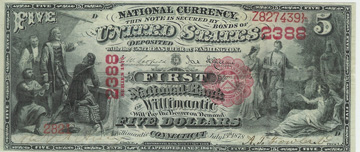
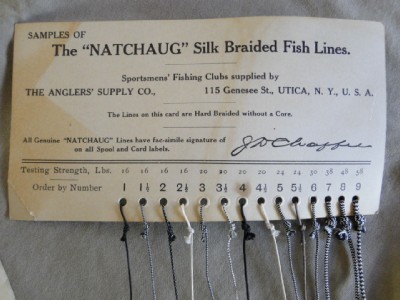
He was known as Colonel Chaffee, after serving on Governor Phineas Lounsbury‘s staff from 1887 until 1889. In 1895, a financial scandal led to the liquidation of the Natchaug Silk Company and the arrest and trial of J. D. Chaffee for fraud (the company had been capitalized in a fraudulent manner by the First National Bank of Willimantic, a fact discovered when the bank’s cashier committed suicide and the bank was investigated). Chaffee later operated, with his son, another manufacturing company, known for its Natchaug Silk Braided Fish Lines. He later llived in the factory’s basement, after the company closed in 1927, until his death in 1938 at the age of 92. His former house on Summit Street in Willimantic was restored in the late-1990s.

The James E. English House (1845)

Designed by Henry Austin, the James E. English House was built in 1845 on Wooster Square in New Haven. James Edward English, who began as a builder, later became a wealthy lumber dealer and a politician, serving in the US Congress and then as Governor of Connecticut. Austin designed for English an Italianate house with unusual columns on the front porch. In 1876, the house was raised a full story, leading to its present, elongated appearance. Today the house is the Maresca & Sons Funeral Home.

The Thaddeus Burr Homestead (1790)

The Burr Homestead, on the Old Post Road in Fairfield, is a mansion built in 1790 by Thaddeus Burr (pdf) a wealthy landowner and uncle of Aaron Burr. It replaced the original Burr Mansion, built in 1732, which stood on the same site. In that earlier house, in 1775, Burr‘s friend John Hancock had married Dorothy Quincy, whose father was also an old friend of Thaddeus Burr. The old mansion was burned in the British raid on Fairfield in 1779, in spite of the pleas of Burr’s wife, Eunice, who even had the silver buckles stolen from her shoes by British soldiers. According to A general history of the Burr family in America (1878), by Charles Burr Todd:

A few weeks after the burning, Gov. Hancock paid his old friend a visit, and while they were surveying the ruins, he remarked to Mr. Burr that he must rebuild, and offered to furnish the glass needed, provided he would build a house precisely like his own in Boston—not an inconsiderable gift, as all who have seen the Governor’s unique mansion, fronting on Boston Common, must admit. Mr. Burr accepted the offer, and built a house the exact counterpart of Mr. Hancock’s. The site of the mansion burned in 1779 is now occupied by the residence of Wm. Jones, Esq.

Gen. Gershom Burr inherited the new house, built by architect-builder Daniel Dimon, from his uncle Thaddeus, who died in 1801. The next owner, Obadiah W. Jones, remodeled and enlarged the mansion in the 1840s. As described in An Historic Mansion, Being an Account of the Thaddeus Burr Homestead, Fairfield, Connecticut, 1654-1915 (1915), by Frank S. Child, the alterations included, “taking out the dormer windows and lifting the roof, taking away the porch and building the broad veranda with its lofty massive fluted columns.” The mansion had other owners over the years. Now owned by the Town of Fairfield and managed by the Fairfield Museum and History Center, the Burr Homestead has restored gardens and the house can be rented for events.

Arad Welton House (1850)

The Arad Welton House, at 238 West Main Street in Cheshire, is a Greek Revival house with large wings extending on each side. The front porch was added around 1900. Arad W. Welton was a manufacturer and first president of the Cheshire Manufacturing Company, established in 1850, which produced combs, brass buttons and other stamped goods. In 1901, the company combined with the Ball and Socket Fastener Co. of Portsmouth N.H. and became the Ball and Socket Manufacturing Co., which focused on buttons.

34 First Avenue, Waterbury (1875)

The house at 34 First Avenue in Waterbury is a Queen Anne-style house with an octagonal turret, built around 1875. The family of Richard Tennant, an immigrant from Scotland, occupied the house from the end of the nineteenth century until 1950. According to the Commemorative Biographical Record of New Haven County, Connecticut (1902):

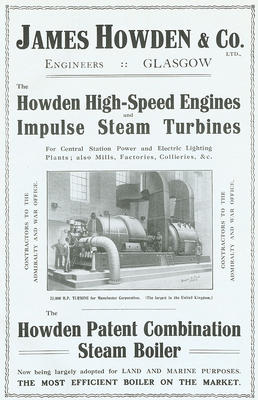
Richard Tennant spent his boyhood and youth on the Scottish homestead, and availed himself of the opportunities of education presented by the local schools. After attaining his majority he went to Glasgow and served three years as an apprentice to the machinist’s trade, at the Neilson Locomotive Works. Howden & Co., marine engineers, had the young man in their employ for two years, and he was then with the London-Glasgow Engineering Co. one year. By this time Mr. Tennant had become an experienced and thoroughly efficient machinist, and his services were in demand. King & Co., a celebrated engineering house, counted him among their ablest employes. Only the desire to come to this country, where many of his compatriots had already reaped a rich reward for their courage and enterprise, induced him to break away from this firm. In 1871 Mr. Tennant came to the United States, and located in Paterson, N. J., where he was in the employ of the Rogers Locomotive Works until the close of the year 1873, and in the following spring he came to Connecticut, working for three months in Ansonia, and then for a year in Seymour, with the Swan Bit Co. Mr. Tennant then returned to Ansonia and engaged with Wallace & Sons until January, 1888, in which month he came to Waterbury to take a position with the Scovill Manufacturnig Co., where he is still at work. For a year Mr. Tennant was master mechanic for the Aluminum Brass & Bronze Co., at Bridgeport, and with that exception has been with the Scovill Co. since coming to Waterbury.

Hillbrow House (1718)

Hillbrow is a colonial house, built around 1718, at 74 Main Street in Newtown. Built, according to the original deed, at the “Head of Main Street,” the house gained its name from its position on the brow of the hill above the street. A granite marker in the front steps is engraved with the name “Hillbrow.” The land where the house stands was acquired by John Blackman in 1715. Later in the eighteenth century, it was owned by Ziba Blakeslee, a clockmaker, silversmith and bellfounder. As described in Newtown’s History and Historian: Ezra Levan Johnson (1917):

Ziba Blakeslee is said to have been a most skilled workman and manufactured all kinds of jewelry. His advertisement in the Farmers Journal, Dec. 22, 1792, shows that he carried on at the head of the Street in Newtown, the goldsmith’s business in all its branches; cast bells for Churches, made and repaired surveyor’s instruments, church clocks and clocks of all kinds.

Also, check out my most recent Massachusetts entry on the Library in Granville, designed by George Keller.