The James E. English House (1845)

Designed by Henry Austin, the James E. English House was built in 1845 on Wooster Square in New Haven. James Edward English, who began as a builder, later became a wealthy lumber dealer and a politician, serving in the US Congress and then as Governor of Connecticut. Austin designed for English an Italianate house with unusual columns on the front porch. In 1876, the house was raised a full story, leading to its present, elongated appearance. Today the house is the Maresca & Sons Funeral Home.

The Thaddeus Burr Homestead (1790)

The Burr Homestead, on the Old Post Road in Fairfield, is a mansion built in 1790 by Thaddeus Burr (pdf) a wealthy landowner and uncle of Aaron Burr. It replaced the original Burr Mansion, built in 1732, which stood on the same site. In that earlier house, in 1775, Burr‘s friend John Hancock had married Dorothy Quincy, whose father was also an old friend of Thaddeus Burr. The old mansion was burned in the British raid on Fairfield in 1779, in spite of the pleas of Burr’s wife, Eunice, who even had the silver buckles stolen from her shoes by British soldiers. According to A general history of the Burr family in America (1878), by Charles Burr Todd:

A few weeks after the burning, Gov. Hancock paid his old friend a visit, and while they were surveying the ruins, he remarked to Mr. Burr that he must rebuild, and offered to furnish the glass needed, provided he would build a house precisely like his own in Boston—not an inconsiderable gift, as all who have seen the Governor’s unique mansion, fronting on Boston Common, must admit. Mr. Burr accepted the offer, and built a house the exact counterpart of Mr. Hancock’s. The site of the mansion burned in 1779 is now occupied by the residence of Wm. Jones, Esq.

Gen. Gershom Burr inherited the new house, built by architect-builder Daniel Dimon, from his uncle Thaddeus, who died in 1801. The next owner, Obadiah W. Jones, remodeled and enlarged the mansion in the 1840s. As described in An Historic Mansion, Being an Account of the Thaddeus Burr Homestead, Fairfield, Connecticut, 1654-1915 (1915), by Frank S. Child, the alterations included, “taking out the dormer windows and lifting the roof, taking away the porch and building the broad veranda with its lofty massive fluted columns.” The mansion had other owners over the years. Now owned by the Town of Fairfield and managed by the Fairfield Museum and History Center, the Burr Homestead has restored gardens and the house can be rented for events.

Arad Welton House (1850)

The Arad Welton House, at 238 West Main Street in Cheshire, is a Greek Revival house with large wings extending on each side. The front porch was added around 1900. Arad W. Welton was a manufacturer and first president of the Cheshire Manufacturing Company, established in 1850, which produced combs, brass buttons and other stamped goods. In 1901, the company combined with the Ball and Socket Fastener Co. of Portsmouth N.H. and became the Ball and Socket Manufacturing Co., which focused on buttons.

The Basilica of the Immaculate Conception (1928)


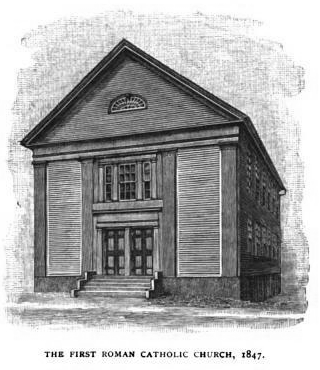
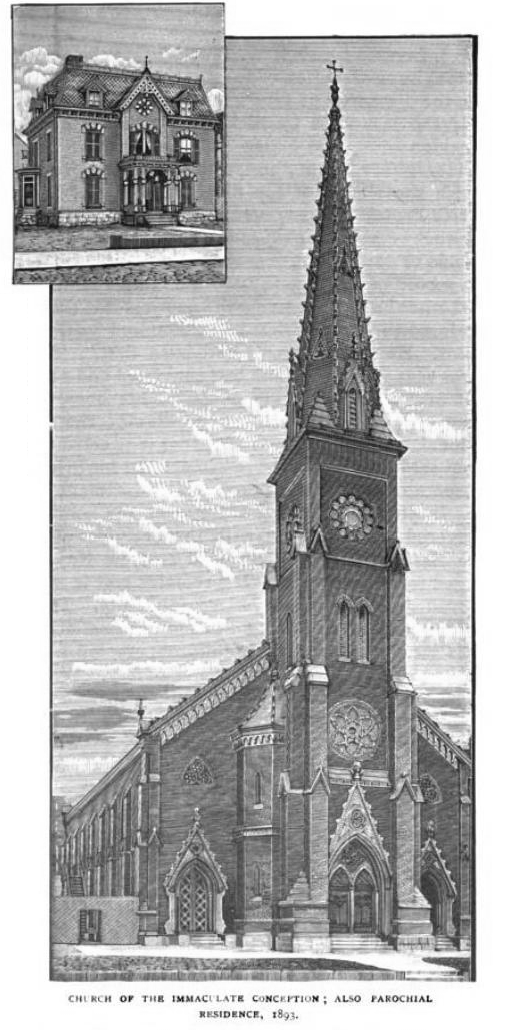
We conclude Waterbury Week with the Basilica of the Immaculate Conception. The first Roman Catholic church in Waterbury was St. Peter’s Chapel, purchased in 1847 from Episcopalians, who were at the time moving to a larger building. The Chapel was moved to the site on East Main Street where St. Patrick’s Hall would later be built. In 1857, across the street from the Chapel, the first church in Waterbury specifically built to be a Catholic Church, the Church of the Immaculate Conception, was dedicated. In 1925 to 1928, a new Immaculate Conception Church was built on Waterbury Green, on the site where the William B. Merriman House once stood. Designed by the firm of McGinnis and Walsh, the church was modeled on the Basilica di Santa Maria Maggiore in Rome, one of the four major Catholic basilicas. A Vatican decree in 2008 conferred on Immaculate Conception Church the status of a minor basilica.

Chase Brass & Copper Company Headquarters (1919)

Designed in 1916 by Cass Gilbert and constructed between 1917 and 1919, the former headquarters building of the Chase Brass & Copper Company is located on Grand Street in Waterbury, opposite the city hall, which was also designed by Gilbert. Both buildings were part of a plan of development for Waterbury by the Chase Company’s president, Henry S. Chase, who died in 1918, a year before his company’s office building was completed. He was succeeded as president by his brother, Frederick. The Chase brothers had rejected the use of brick for the new building, so that it would contrast with the colonial style of the nearby city hall. The company left Waterbury in the 1960s, selling the building to preservationists in 1963 for one dollar. In 1966, it was purchased by the city for use as offices and is now known as the Chase Municipal Building.

Elton Hotel (1904)

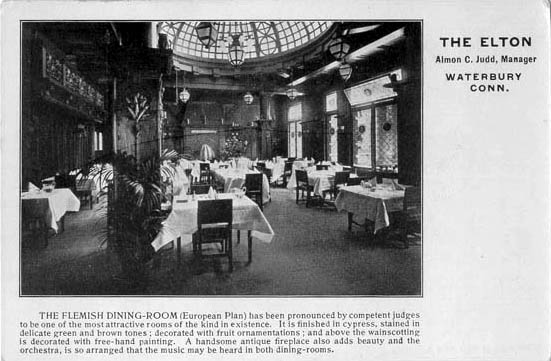
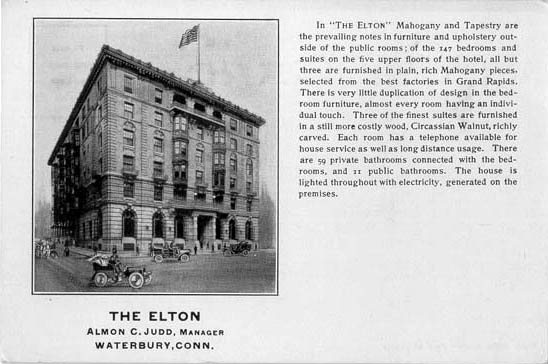
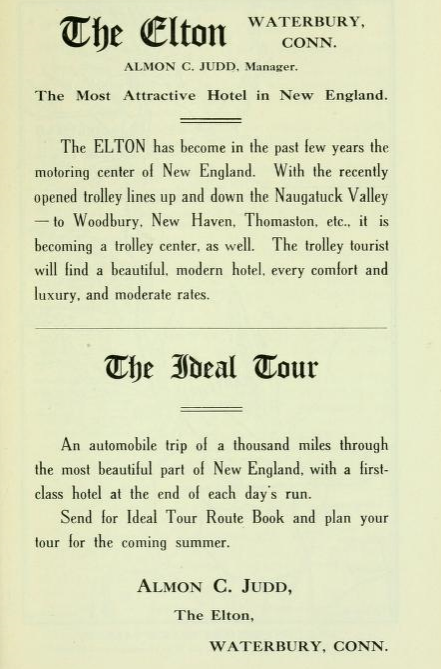
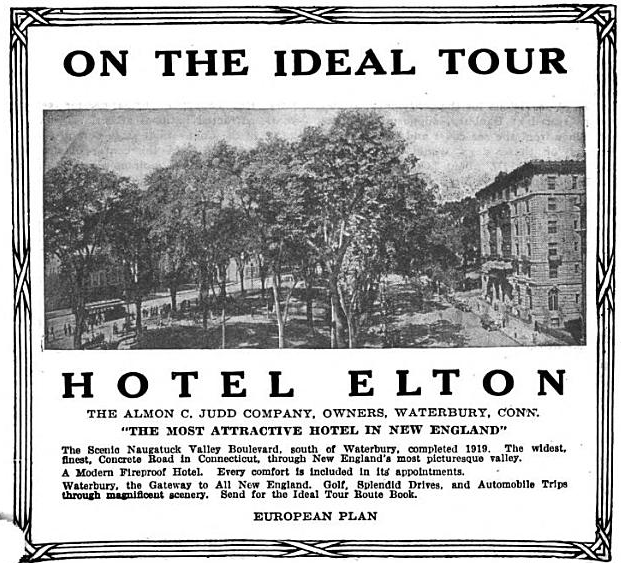
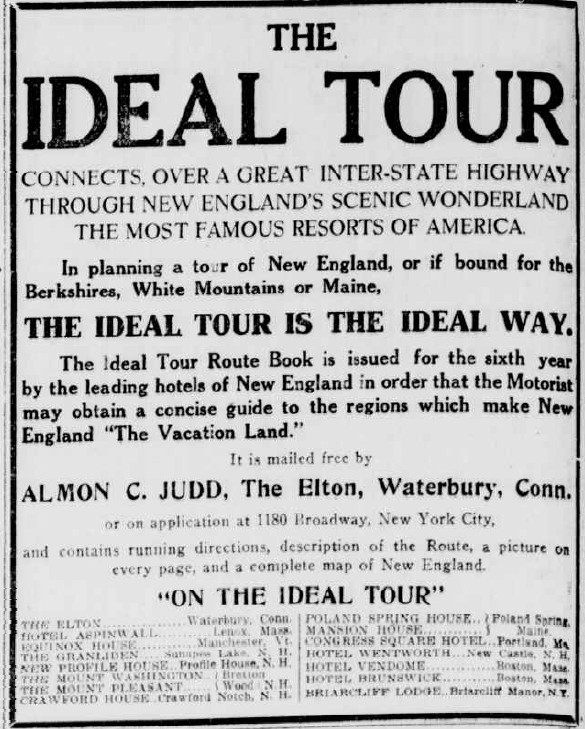
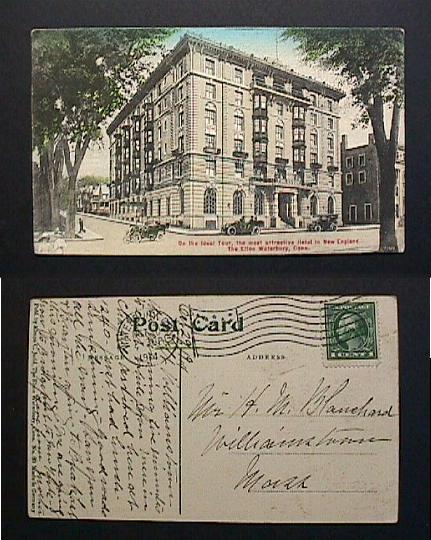
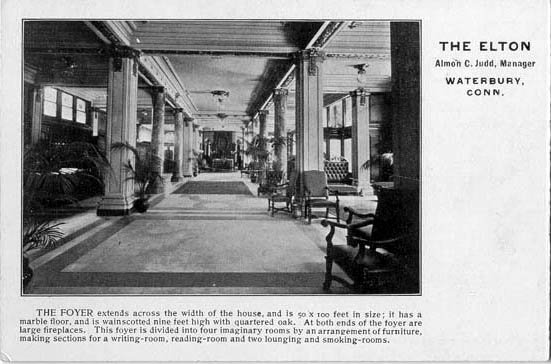
The Elton Hotel, at Prospect and West Main Streets on the Green (Video link) in Waterbury, was for many years the city’s grandest hotel and a social and businesses center. Built in 1904 and designed by Wilfred Griggs in the style of the French Renaissance, the Elton Hotel featured luxurious amenities, including several restaurants and ballrooms. The hotel was constructed on the site of the colonial-era Scoville Homestead, which was torn down to make way for the new building. The Elton Hotel‘s first manager, Almon C. Judd, developed what became known as the “Ideal Tour,” an automobile route through New England, starting at the Elton and stopping at various hotels and resorts. Over the years, many celebrated people stopped by or stayed at the Hotel Elton. John F. Kennedy made a campaign speech in 1960 from the hotel balcony and the humorist, James Thurber, wrote the story, “The Secret Life of Walter Mitty,” (pdf) which features a Waterbury hotel lobby, at the Elton. Today the building serves as an assisted-living facility.

Odd Fellows Hall, Waterbury (1895)

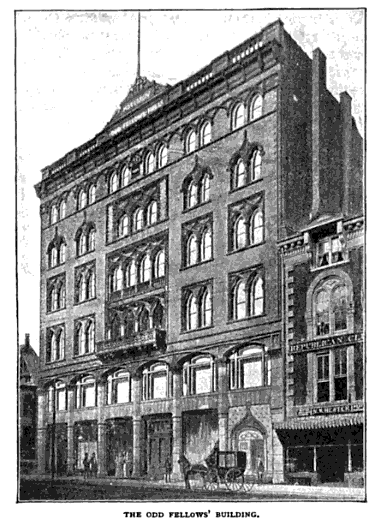
Nosahogan Lodge, No. 21, of the Independent Order of Odd Fellows was organized in Waterbury in 1845. The Lodge met in various rented halls until 1895, when the Odd Fellows Hall was completed and dedicated on North Main Street. Plans for the building were drawn up by Wilfred E. Griggs, a member of the order who designed many prominent buildings in Waterbury. As described in The Town and City of Waterbury, Vol. 3 (1896),

The hall occupies the ground formerly occupied by the Second Congregational church (the side and rear walls having been left standing), and also the space which lay between it and the street. The new building fronting on the street is forty-three and a half feet deep and six stories high, and contains the Odd Fellows’ parlors and about forty offices. The rear portion is partly three and partly two stories high, and contains the lodge room, various working rooms and the banquet hall. The building is in the Venetian Gothic style, in this respect standing alone among Waterbury edifices. The first two stories are built of Potsdam red sandstone, the stories above of “old gold” Pompeian brick, trimmed with speckled terra cotta. The building is provided with an elevator, is heated throughout with steam, and is more nearly fire-proof than any other office building in Waterbury.

In 1948, the building was sold to the Grieve, Bisset & Holland Department Store. The building‘s original front entrance and decorative roofline crown were later removed.