
One of the oldest houses in Morris is the Ephraim Spencer House, located at 395 Bantam Lake Road. Built in 1782, it was the Blue Spruce Inn and restaurant in the 1940s.
(more…)One of the oldest houses in Morris is the Ephraim Spencer House, located at 395 Bantam Lake Road. Built in 1782, it was the Blue Spruce Inn and restaurant in the 1940s.
(more…)
The Beaux Arts building at 220 Main Street in Danbury, one of a row of three bank buildings, was erected in 1908-1909 as the headquarters of the Savings Bank of Danbury. It was designed by Danbury architect Philip Sunderland. The origin of the bank, which was founded by George White Ives, the grandfather of composer Charles Ives, is described in James Montgomery Bailey’s History of Danbury (1896):
(more…)Nearly a half century ago, when Danbury had no electric lights, no pavements, no street railway, but was a pretty town with grand old trees and beautiful gardens, one of her venerated citizens, Horace Bull, suggested to George W. Ives that a savings bank would be a blessing to many of the town people. To one so keenly alive to the interests of Danbury and of his fellow-citizens the suggestion had but to be made to be acted upon, and the Savings Bank of Danbury, chartered in 1849, commenced business on June 29th of that year [. . . .]
Notice was duly given that deposits would be received at the house of the Treasurer from 2 P.m. to 5 P.m. on Saturday of each week.
The old Ives homestead, so well known and so full of pleasant memories, thus became the cradle of the first savings bank. A desk in the dining-room was the safe, and in the absence of the Treasurer Mrs. Ives received deposits and attended to the business of the bank. After a time it seemed necessary to have a building and a safe, and Mr. Ives built at his own expense the little building, still standing in the corner of the dooryard of his old homestead, and the savings bank had a “habitation” as well as a “name.” From this small beginning the assets of the bank have increased to the sum of $2,869,922 on March 30th, 1895.

The building that is known today as North Branford Hall was erected c. 1876 as the town’s Center School (District #2). Located at 1675 Foxon Road in North Branford, it replaced an earlier school building on the site that had been moved there from across the street in 1866 when the Soldiers’ Monument was erected. After a new Center School was built in 1920, the 1876 building was acquired by the North Branford Civic Association. The former school, which has lost its original bell tower, would served for many years as Town Hall and later (until 2013) as a senior center. A rear addition was constructed in 1925. Last year, the building was completely renovated to become the new home of Totoket TV’s Community Media Center.
(more…)
David Wickham (1714-1797), a shoemaker, purchased land to build the house at 1197 Main Street in Glastonbury in 1742, with additional land purchased in 1745, by which time the house was standing. Across the rear of the house is a one-story shed-roof extension which is part of the original construction.

The house at 87 Ferry Lane in Glastonbury was erected c. 1810 by James Hodge, who was descended from one of the town’s earliest settlers. In 1869, it was the home of James Caswell, who had his cabinetmaking shop nearby.

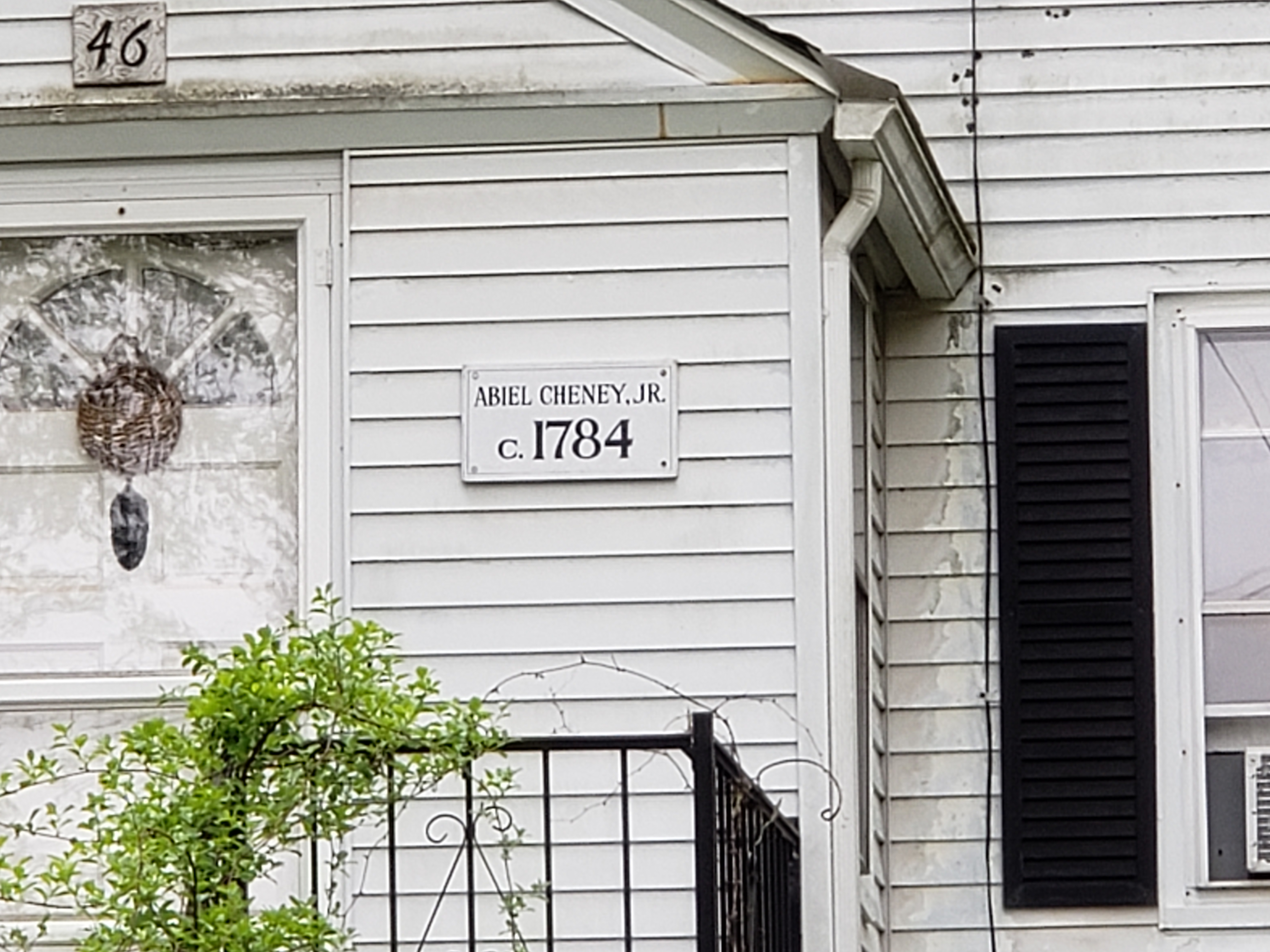
The house at 46 Indian Hill Road in Portland was built c. 1784–1785 (or later, in 1796) by Abiel Cheney, Jr. It was later owned by George Lewis, Jr., who ran the nearby shipyard and had another house at 628 Main Street.
(more…)
George Lewis, Jr. (1747-1826) was a shipbuilder who erected the house at 628 Main Street in Portland in 1778. His shipyard was nearby, along the Connecticut River. As described in the History of Middlesex County (1884):
For more than a century and a half shipbuilding has been the chief industry of that part of Portland now called Gildersleeve, and it was for a time the most active business in the town. Early in the last century, George Lewis built vessels on the present site of the Gildersleeve yard. The first vessel built in Portland was launched here in October 1741.
Sylvester Gildersleeve purchased the Lewis yard from George Lewis, Jr.’s son, Abel Lewis, in 1838. In 1927, the house the residence of George Lewis’s granddaughter, Elizabeth H. Gildersleeve.
(more…)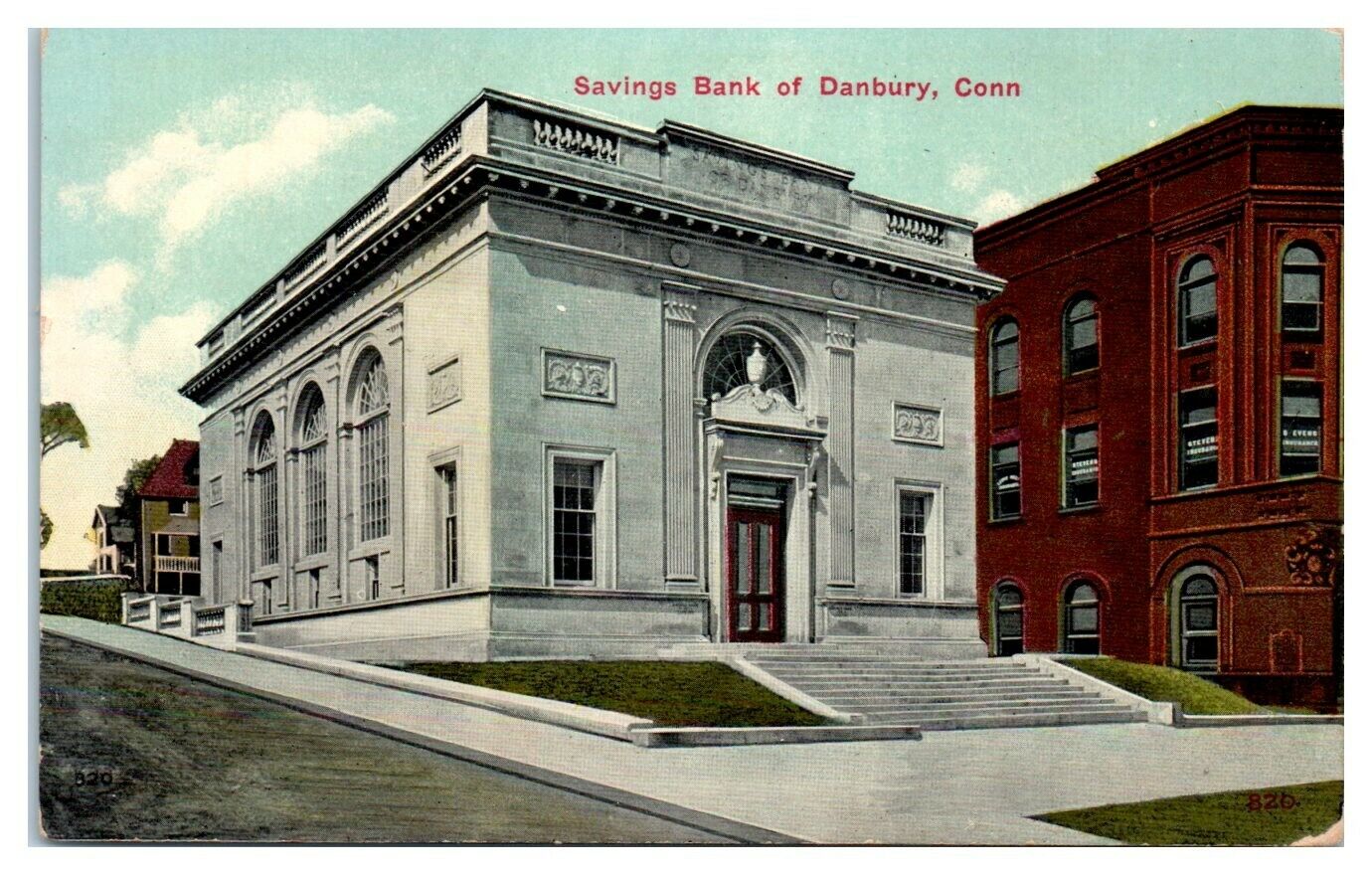

You must be logged in to post a comment.