American Legion Hall, Granby (1847)

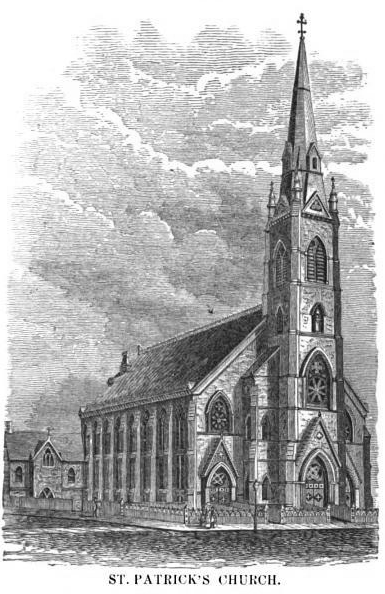
This Fourth of July we’re looking at the American Legion Hall in North Granby. In 1845, in his History of Simsbury, Granby, and Canton, Noah A. Phelps wrote that “There is a society of Universalists in North Granby. The members meet every other Sunday for worship, and have taken measures to erect a house for their religions meetings.” By 1848, as explained in The Universalist Miscellany, Volume 5, No. 8, “The Universalist Church recently erected in Granby, Ct., was dedicated on the 1st of December [1847]. Sermon by Bro. H. B. Soule, of Hartford. The church is a very neat building, and will seat three hundred persons.” The Universalist congregation disbanded in 1911 and the former church served as a school until 1949. It then became an American Legion Hall.

Samuel Richards House (1792)

In 1736, Timothy Hawley sold land along Main Street in Farmington to Ezekiel Tompson. A house may already have been standing on the property and then been expanded into its present form by Thompson, or he may have built the house himself. Whichever the case, the house was in existence by 1783, when it was inherited by Ezekiel‘s son, Isaiah Thompson, who sold it that same year to Deacon Samuel Richards, who had served as a captain in the Revolutionary War and was the first postmaster of Farmington. In Farmington, Connecticut, the Village of Beautiful Homes (1906), it is said that the house was built by Richards in 1792 and this has been the date traditionally given for its construction. The house was next owned by Abner Bidwell, a merchant involved in the construction of the Farmington Canal.

Old Town Hall, Fairfield (1794)

The Old Town Hall in Fairfield was built in 1794 as a county courthouse, replacing its predecessor, built in 1769 and burnt by the British in 1779. That structure had replaced the earliest courthouse in town, built in 1720. According to the Centennial Commemoration of the Burning of Fairfield, Connecticut (1879), the 1769 building “had only recently been erected in place of one standing before where Mr. Hobart’s store now stands. A noted thief named Fraser, confined in the jail then connected with it, had set that building on fire on the 4th of April, 1768. Hence had come the rebuilding, and the erection of a separate prison which was located where St. Paul’s church now stands.” The 1794 building also served as the Town Hall and in 1870, it was aggrandized by being converted into the Second Empire style. In the late 1930s, the building was again remodeled and restored to a Federal-style appearance by local architect Cameron Clark, with two new wings added on either side. Town offices moved out when a new building, Independence Hall, was completed in 1979.

The Alanson Abbe House (1832)

Dr. Alanson Abbe was a doctor who specialized in spinal injuries. He used his 1832 house, at 65 South Street in Litchfield, as a hospital for a decade before moving to Boston in 1839. The house, which has a portico with Doric columns wrapping around on three sides, is one of few high-style examples of the Greek Revival in Litchfield, because the town was in a period of economic decline during the period the style was in favor nationally.