Richard Brown House (1850)

224 Cornwall Ave., Cheshire

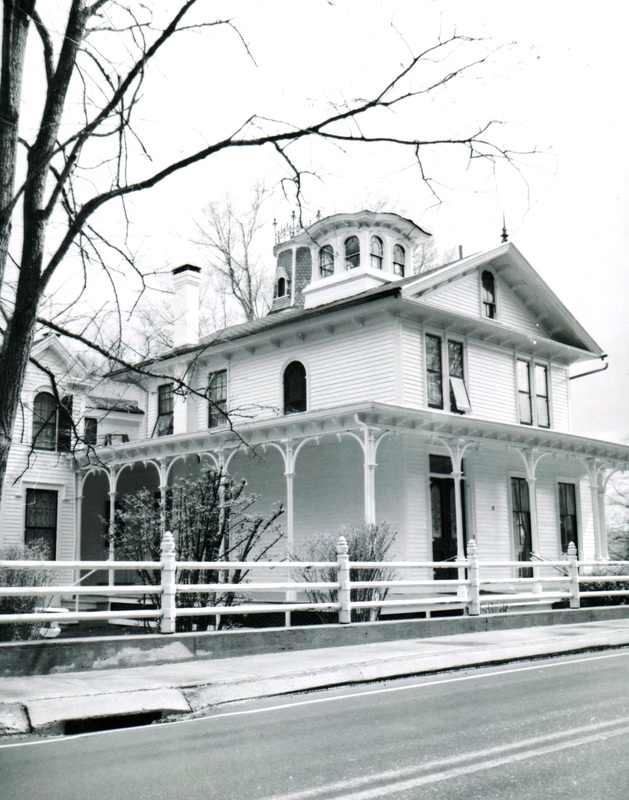
In the nineteenth century, Cheshire became famous for its barite mines. Barite was discovered in Cheshire around 1840 and mining activity continued until 1878. Many miners from Cornwall in England settled in Cheshire to work in the mines. One such miner was Richard Brown, who rented the house at 224 Cornwall Avenue. It was built in the 1850s as an investment property by Edward A. Cornwall, a prominent citizen of Cheshire. Cornwall sold many other parcels of land from the Cornwall Farm, which went back in his family to the 1790s. Richard Brown later purchased the house with a mortgage held by Cornwall. The house was a twin of the residence next door at 214 Cornwall Avenue, which was also a rental property erected by Cornwall. The house at 224 Cornwall has a later Victorian front porch. The large dormer on the west side of the house was added in the late 1970s. (pdf source)

Eolia (1906)

Eolia

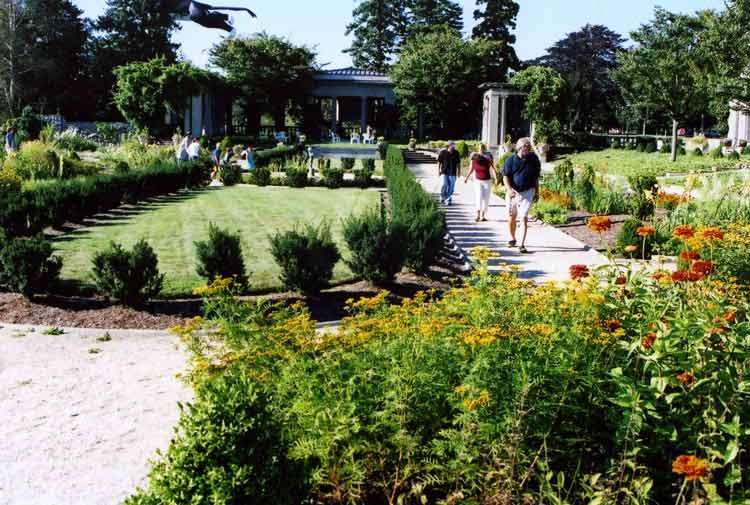
Harkness Memorial State Park, located on Long Island Sound in Waterford, was once the estate of Edward Harkness (1874-1940) and his wife Mary Harkness. Harkness, one of the richest men in America, inherited great wealth from his father, Stephen V. Harkness, who had been a silent partner of John D. Rockefeller in the Standard Oil Corporation. Used by Harkness as a summer estate, it was called Eolia, named for the island home of Aeolus, Greek God of the winds. The mansion, designed by Lord & Hewlett of New York, was built in 1906 for Jessie and William Taylor, Mary Harkness’s sister and brother-in-law, who sold it the following year. Edward and Mary Harkness then hired their favorite architect James Gamble Rogers to do interior renovations and add a pergola to the property. The estate’s gardens were designed by landscape architect Beatrix Farrand. Mary Harkness left the estate to the State of Connecticut in 1950. The mansion and grounds were restored in the 1990s by lead architect Roger Clarke, with contributions by architect Peter Clarke and consultant on historic gardens Rob Camp Fuoco. Today Eolia is a popular location for weddings (pdf about weddings). (more…)

Walter Gwatkin House (1905)

Walter Gwatkin House

There is some uncertainty about the date and exact address of the Walter Gwatkin House on Worthington Ridge in Berlin. The nomination form for the Worthington Ridge Historic District lists it as no. 1008 and gives the date as c. 1905. A walking tour booklet (doc) for the District gives the address as 1006 and the date as c. 1861, noting that the porch dates to the early 1900s. Walter Gwatkin (1856-1921) was a prosperous butcher, farmer and landowner. Catharine M. North, in her History of Berlin (1915), makes note of the house that existed before the current one:

In 1817 Horace Steele, Elishama Brandegee’s next door neighbor on the south, was engaged in the business of bookbinding. Afterwards he made bandboxes, which he carried to Hartford to sell to the milliners.

Mr. Steele’s children were Eliza (mother of the Rev. Andrew T. Pratt, missionary in Turkey), Caroline (Mrs. Joseph Booth), Mary, Jane, Lucy Ann (Mrs. Lorenzo Lamb), and William.

Their home, a large colonial house set well back from the street, was, in its day, socially a center of attraction, filled as it was with bright, merry young people. The old house was torn down by William Steele and the house which he built on its site is now owned by Walter Gwatkin.

Nathaniel Eliot House (1755)

Nathaniel Eliot House

The Nathaniel Eliot House, built in 1755, is located at 103 Whitfield Street in Guilford. Nathaniel Eliot was a farmer. He married Beulah, daughter of Joseph Parmelee, in 1754. Their daughter, Mary, married Israel Halleck, a tailor from Duchess County, New York. Their son was Fitz-Greene Halleck, the prominent nineteenth-century poet. As related in an obituary of the poet that appeared in Putnam’s Magazine (Vol. I, No. 2, February, 1868):

His father, Israel Halleck, who followed the calling of a tailor, was an emigrant from Dutchess County, New York. He died at Guilford in 1830, at the age of eighty-four; and is remembered in the village as a man fond of books, a great reader, of extraordinary memory, full of wit and anecdote, and of most courteous manners. The poet’s mother, Mary, daughter of Nathaniel Eliot, of Guilford, a lady of irreproachable worth, was a descendant of the Rev. John Eliot, the venerable “Apostle of the Indians.” She was married in her thirtieth year, and died in 1819, at the age of fifty-seven.

Hugh Mead Alcorn House (1902)

300 S Main St., Suffield

Hugh Mead Alcorn (1872-1955) of Suffield, the son of Irish immigrants, was educated Connecticut Literary Institution (now Suffield Academy) and studied law with the Hartford firm of Case, Bryant and Case. He was elected to the state legislature in 1903 and served as state’s attorney for Hartford County from 1908-1942. He prosecuted the famous Amy Archer-Gilligan poison murders of 1913-16, which formed the basis for the famous play and movie Arsenic and Old Lace. Alcorn’s Colonial Revival house, at 300 South Main Street in Suffield, was built in 1902. The house was later enlarged by Alcorn’s son, Robert Hayden Alcorn (1909-1980), who was the author of such books as No Bugles for Spies: Tales of the OSS (1962) and The Biography of a Town: Suffield, Connecticut (1970). Hugh M. Alcorn had two other sons who became lawyers and politicians: Howard Wells Alcorn (1901-1992), who served as Chief Justice of the Connecticut Sppreme Court from 1970-1971, and Hugh Meade Alcorn, Jr. (1907-1992), known as Meade Alcorn, who was the Republican leader in the Connecticut General Assembly in the 1940s.

Boardman House (1875)

Boardman House

In 1842, Luther Boardman invented and patented an improved mold for creating britannia silverware. He established a factory in East Haddam where he produced britannia spoons. In 1864, Luther Boardman entered a partnership with his son Norman S. Boardman, under the name L. Boardman & Son. This successful business peaked in the 1860s and 1870s. Norman Boardman had already built the Italianate house at 8 Norwich Road when another grand residence was constructed next door circa 1875. A more eclectic house than its neighbor, it features an Italianate design and an octagonal rear tower on west side with a mansard roof and Eastlake-style iron cresting. There is some confusion over who built the house. The National Register of Historic Places nomination for the East Haddam Historic District lists the house as the Norman S. Boardman House, while an 1880 bird’s-eye-view of East Haddam lists it as the residence of his father, Luther Boardman. An online collection of images from the Boardman Collection at the East Haddam Historical Society has a photo of the house with the description “The Lawton House owned by the Boardman Family.”