St. John’s Episcopal Church, Waterbury (1873)

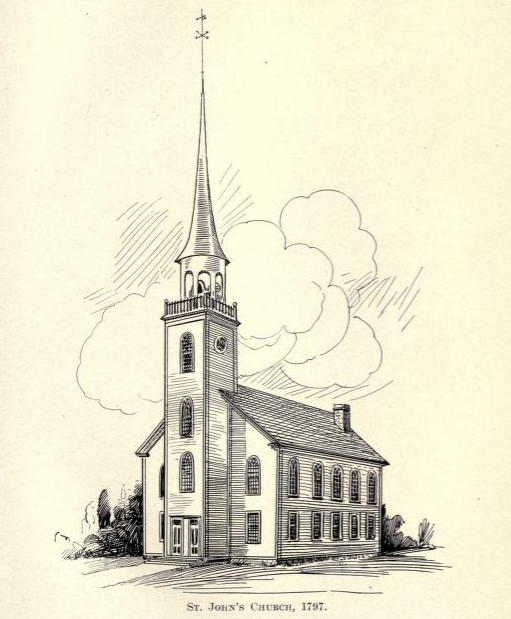
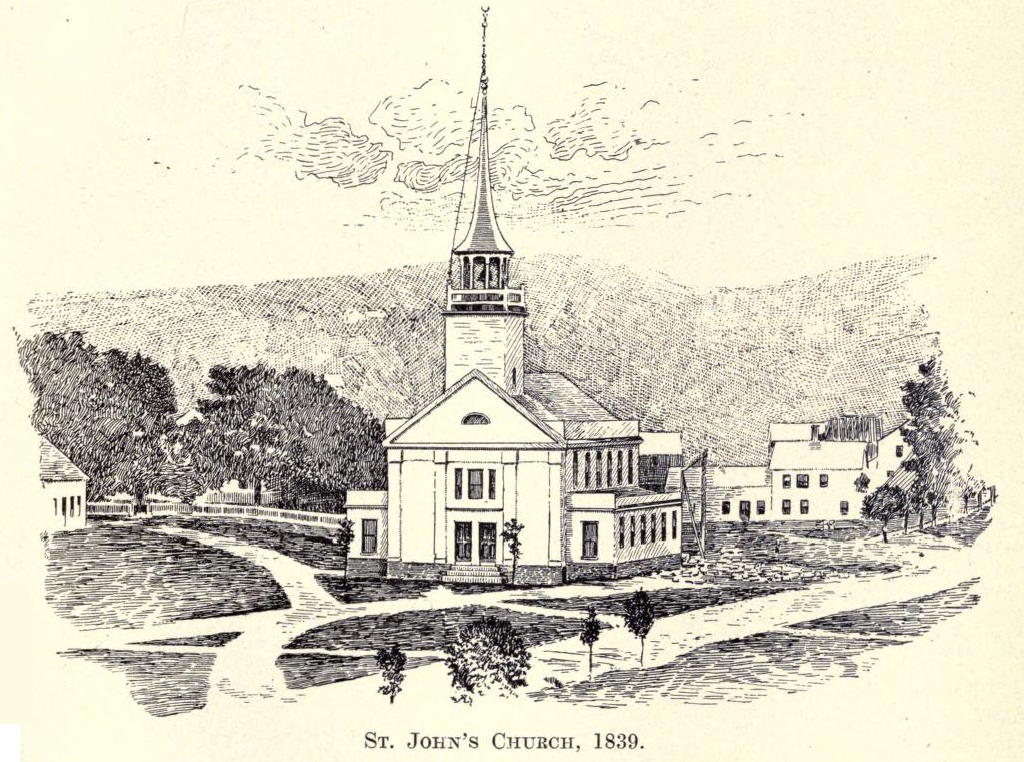
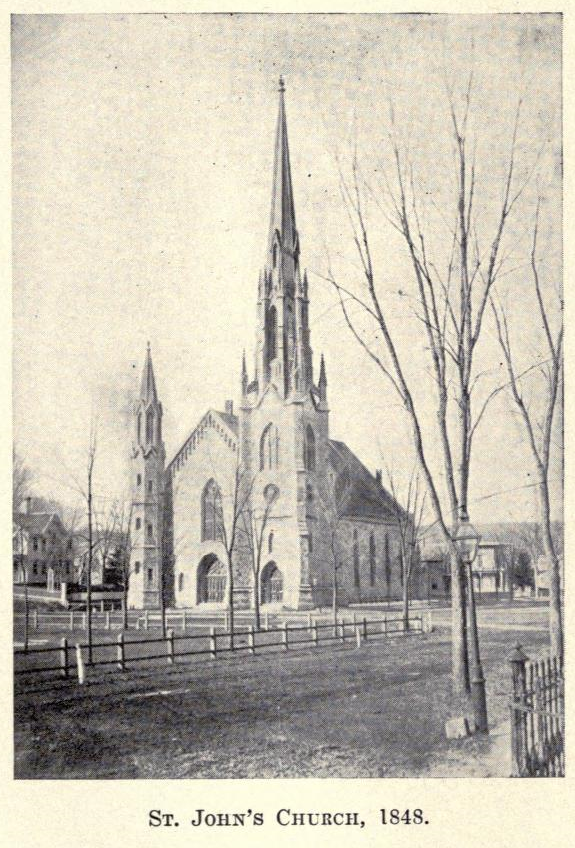
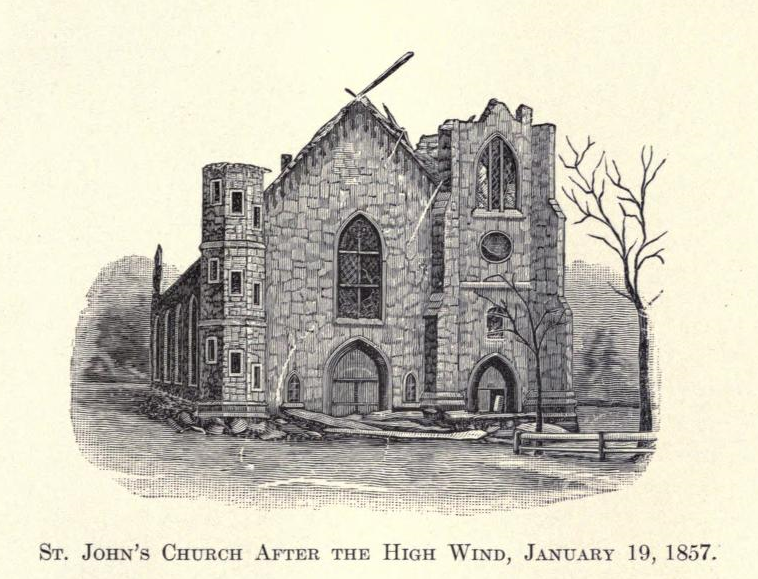
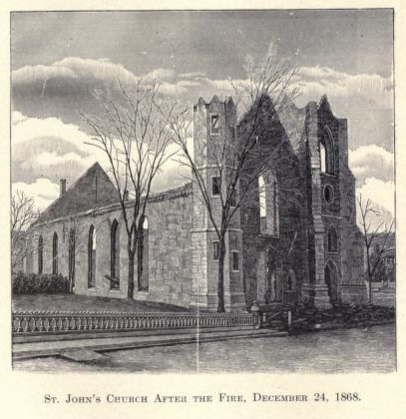
St. John’s Episcopal Church in Waterbury was established in 1737, with the first church building being constructed in 1743 at West Main and Willow Streets. A new church was built in 1797 at the west end of Waterbury Green, the first of three successive churches at that location. Expanded in 1839, the 1797 church was moved to East Main Street in 1847 to become St. Peter’s Catholic Church (it was torn down in 1888). The second, granite Gothic Revival church was built in 1848. This church’s steeple toppled in a high wind in 1857 and the church itself burned down on Christmas Eve, 1868. It was replaced by the current church, built in 1873 and designed by Henry C. Dudley, an architect known for his Gothic Revival churches. The church features stained glass windows by Louis Comfort Tiffany.

Monroe Congregational Church (1847)

In 1762, residents of New Startford, now Monroe, successfully petitioned the State Legislature to establish a new parish. Previously, residents had made the long journey to Huntington (now Shelton) for worship. A meeting house, for use during the winter, had previously been built on Moose Hill Road. Once the New Stratford Ecclesiastical Society was formed, a new meeting house was built in 1766 on what is now Monroe Green. This was replaced by the current Monroe Congregational Church, built just to the north, in 1847. In 1985-1986, the church was expanded and the interior was restored as closely as possible to its nineteenth-century appearance.

Huntington Street Baptist Church (1843)

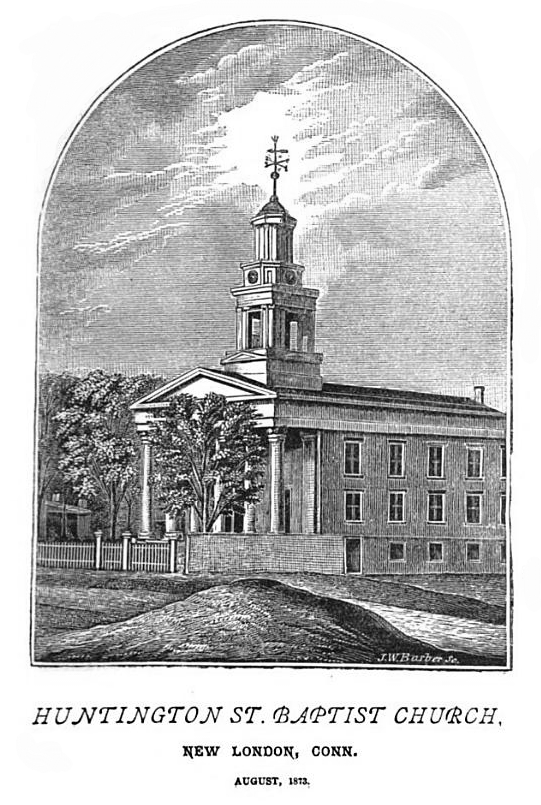
The Greek Revival-style Huntington Street Baptist Church in New London was built in 1843 and was originally a Universalist church. It was designed and built by John Bishop, a member of the church, who was inspired the book, The Beauties of Modern Architecture (1835), by Minard LaFever, a prominent architect of churches in the early nineteenth century. Financial difficulties led the Universalists to sell the church in 1849 to a Baptist congregation. As explained in Frances Manwaring Caulkins‘s History of New London (1860):

A third Baptist church was constituted March 14th, 1849, by a division of one hundred and eighty-five members from the first church. This society purchased the brick church in Huntington Street, built six years previous by the Universalist society, for $12,000, and dedicated it as their house of worship, March 29th, 1849. Sermon by Rev. J. S. Swan, who was the chief mover in the enterprise, founder and pastor of the church. In 1850, the number of members was three hundred and eleven.

Jabez Smith Swan was a prominent preacher and hymnist (pdf link)

Center Congregational Church, Manchester (1904)

In 1772, the Ecclesiastical Society of Orford was established, in what would later become the town of Manchester. Owing to the unsettled conditions at the time of the Revolutionary War, it took twenty years for a Congregational meeting house to be built, although the congregation used the unfinished building for worship, starting in 1779, before it was finally completed in 1794. This first church building, which stood about 130 feet east of the present Center Church, was replaced by a new structure in 1826 on the same location. The building was raised up in 1840 so that a basement could be added below. The basement was then rented to the town for the transaction of public business. In 1878, the church’s steeple blew off and crashed through the roof. It was then sold to the town and a new church was built the following year in the Gothic style. The current church, now known as Center Congregational Church, was built in 1904 in the Colonial Revival style. The neighboring brick parish house was added in 1930 and the Simpson Educational Wing in 1957.

Congregational Church of Naugatuck (1903)

The Congregational Church of Naugatuck is on Division Street, across from Naugatuck’s Green (part of which is owned by the Church and is leased to the Borough of Naugatuck). This is the Church’s third building. The first was built on a hill to the east in 1782, a year after the congregation was formally gathered. In 1831, it was moved to a location across from the present church, on the northeast corner of what is now the Green, on land donated by Daniel Beecher, an inn keeper. It was sold and moved again, this time across the street to become a store, being replaced by the second church, built in 1853-1854. The present church was built in 1903 and was designed by the renowned architectural firm of McKim, Mead and White. It was one of several commissions by the firm around Naugatuck Green arranged by the prominent local industrialist, John Howard Whittemore.

North Congregational Church, New Hartford (1828)

The first church building in New Hartford was the Town Hill Church, which took ten years to build, 1739 to 1749. By 1828, it was necessary to build a new church, but residents in North Village wanted the replacement to be relocated closer to their own homes. Forming the North Ecclesiastical Society of New Hartford, some residents in the northern part of town constructed their own Congregational Church. A new church was also built on Town Hill, but another split led to the establishment of Nepaug Congregational Church in 1848. The Town Hill Church was abandoned in 1854 and taken down in 1859. The interior of the North Congregational Church was renovated in the later nineteenth century.

Mystic Congregational Church (1860)

Richard A. Wheeler writes, in the History of the Town of Stonington (1900), that the Mystic Congregational Church

was organized by thirty-seven seceding members from the First Congregational Church of Stonington, with five persons from other churches, on the 30th day of January, 1852, under the approval of a committee of the Consociation of Congregational Ministers and Churches of New London County[…..] The cornerstone of their present church edifice was laid with appropriate ceremonies Nov. 24th, 1859, and went on to completion and dedication. It was enlarged in 1869 by the addition of fourteen feet to its length.