New London City National Bank (1905)

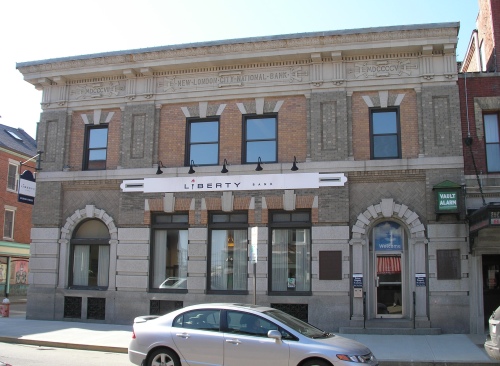
The New London Bank was founded in 1807 and in 1865 was reorganized as the New London City National Bank. It was New London’s second bank, following the establishment of the Union Bank in 1792, and its founding made New London the state’s first city to have two banks. According to A Modern History of New London County, Vol. 2 (1922):

The old stone building on Bank street, which was built for this institution in 1820 and was occupied by it for eighty-five years, was in most respects sufficient for the need of former days, but in 1905 it seemed evident that the time had come for increased facilities, and the present structure was erected, covering the old site and also the land extending to the corner of Golden street. This is a modern building, with a well protected vault and such other equipment as the business of the bank has thus far required.

In 1953 the bank became part of the Shawmut National Corporation. Today the building is a branch of Liberty Bank.

Litchfield County Courthouse (1889)

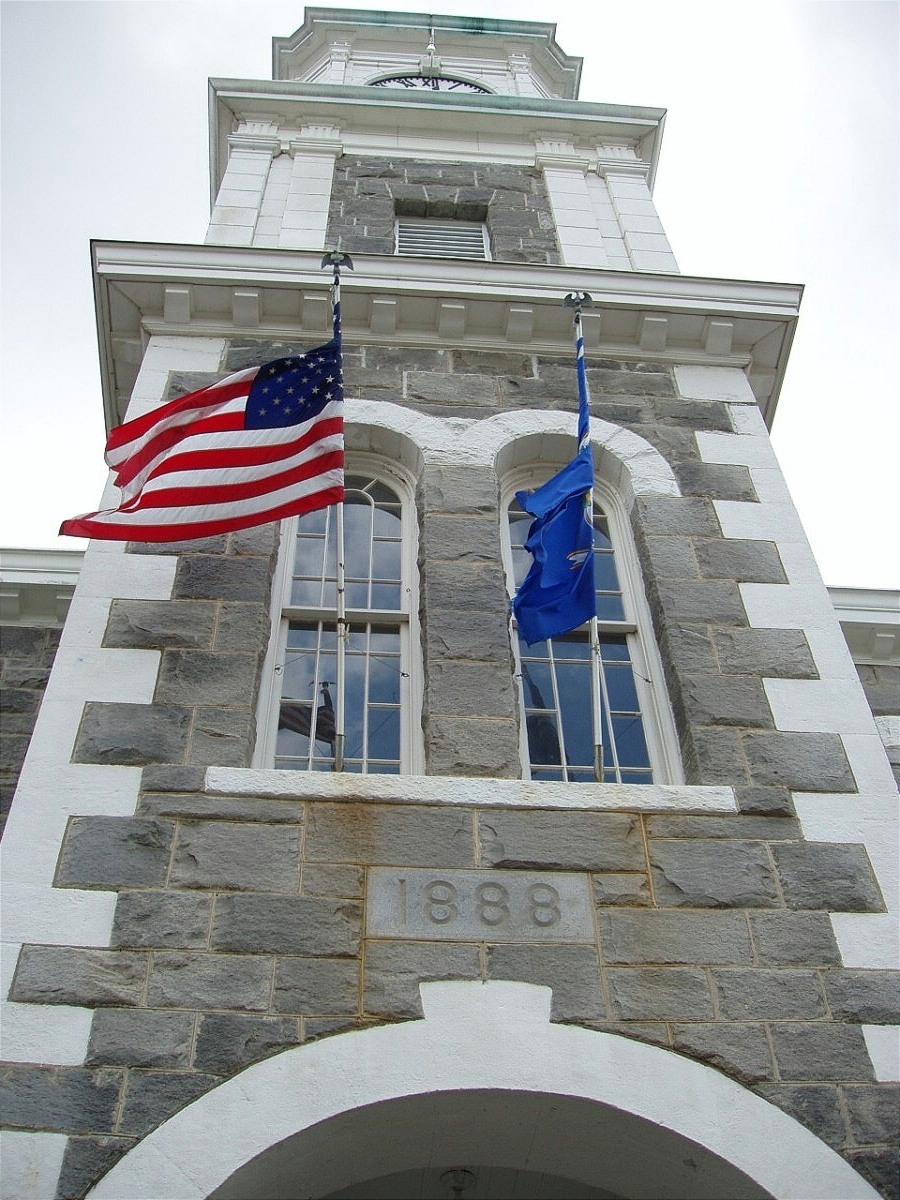
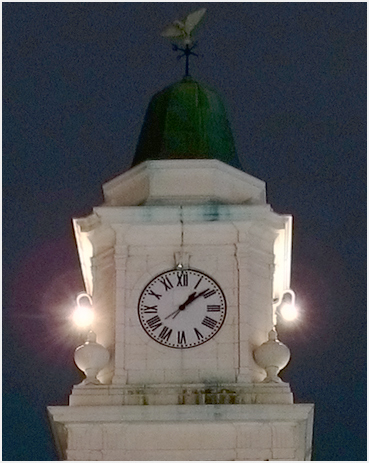
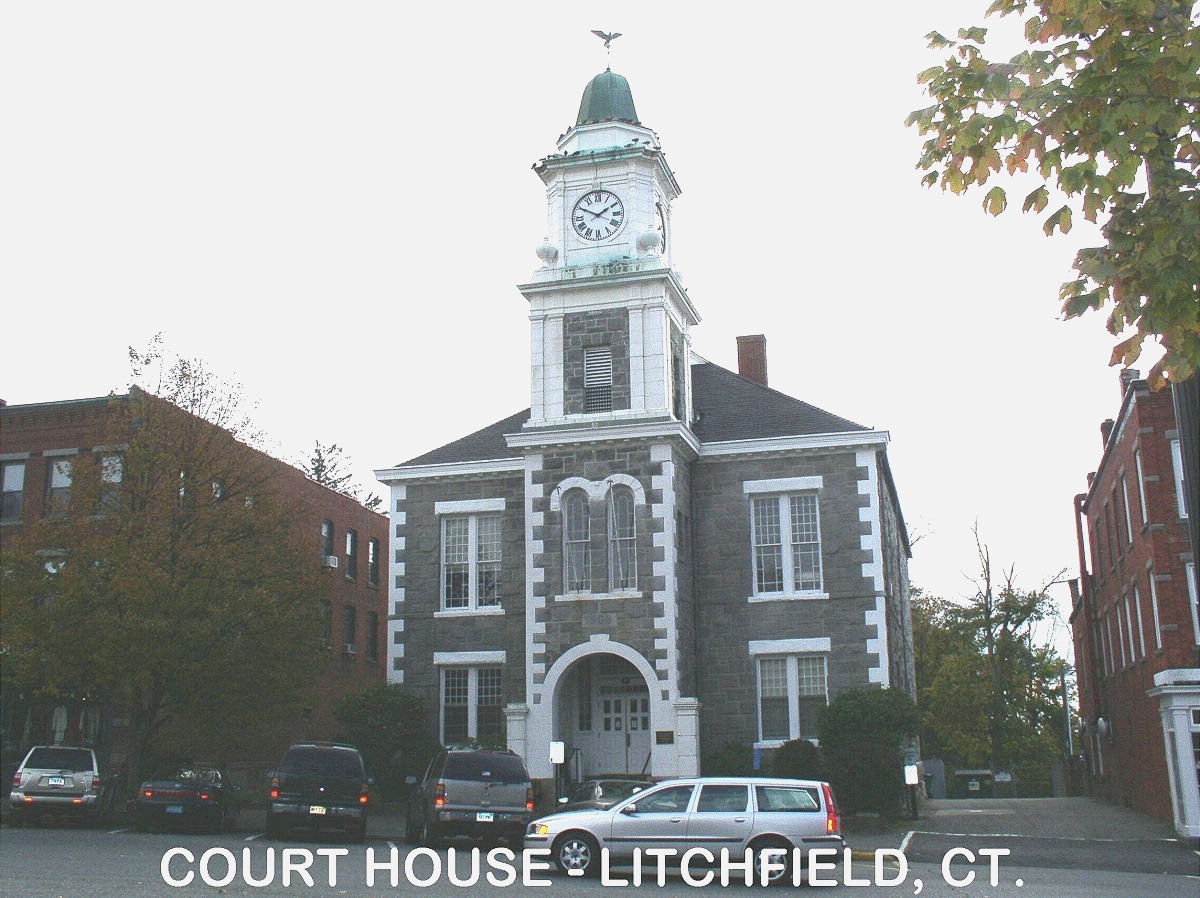
Four successive Litchfield County Courthouses have stood in the center of Litchfield. The first, built in 1752, was a plain building resembling a meeting house. The second, designed by William Sprats and built in 1797, was destroyed by fire in 1886. It was quickly replaced by a new courthouse, which also burned, just after its completion in 1888. Another new courthouse, designed by Waterbury architect Robert Wakeman Hill and constructed of Roxbury granite, was completed in 1889 in the Romanesque Revival style. As Litchfield embraced the Colonial Revival movement in the early twentieth century, a remodeling of the courthouse was undertaken in 1913-1914 to add space and also to better reflect the colonial character of the town. Georgian-style corner quoins were added to the structure and the original turreted tower was replaced with a new cupola. The building now serves as the Litchfield Judicial District Courthouse.

Putnam Building, Hartford (1860)

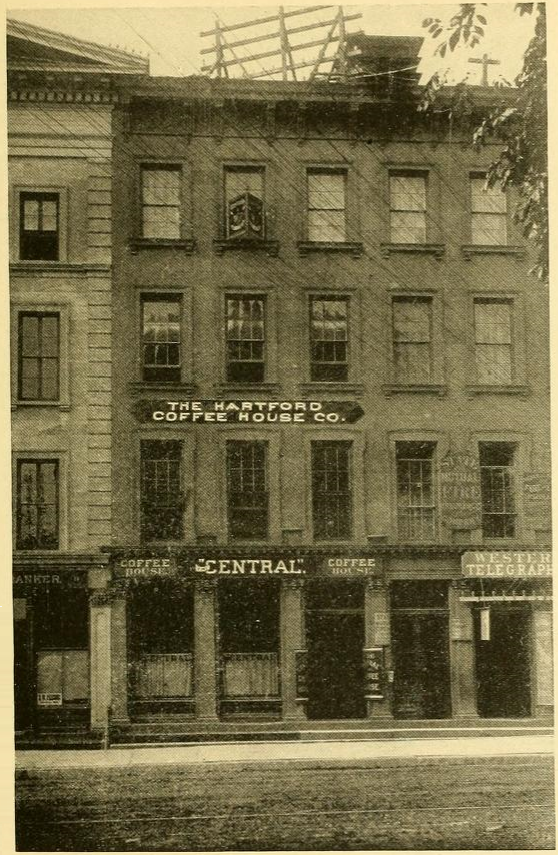
The Putnam Building is on Central Row in Hartford, sandwiched between two early skyscrapers, the Hartford-Connecticut Trust Company building of 1920, on the right, and the Travelers Insurance Company building of 1928, on the left. Built around 1860, the Putnam Building is typical of the many brownstone commercial buildings, influenced by the style of the Italian Renaissance, that were constructed in downtown Hartford at the time. A historic photo in the collection of the Connecticut Historical Society shows the building in 1904, with the two skyscrapers’ predecessors on either side of it: the old Hartford Trust Company building on the right and the Marble Block on the left. Another historic photograph, found in the 1895 book, Hartford and its Points of Interest, shows the building when the Hartford Coffee House Co. was one of its tenants.

The presence of the Putnam Building was acknowledged when the Hartford Trust Company skyscraper was built (to the right) in 1920, as the limestone base section of that later building matches the height of its nineteenth-century neighbor. In turn, the ground floor of the Putnam building was remodeled in granite in the 1920s, reflecting the style of the then recently built adjacent structure.

Bolton Congregational Church (1848)

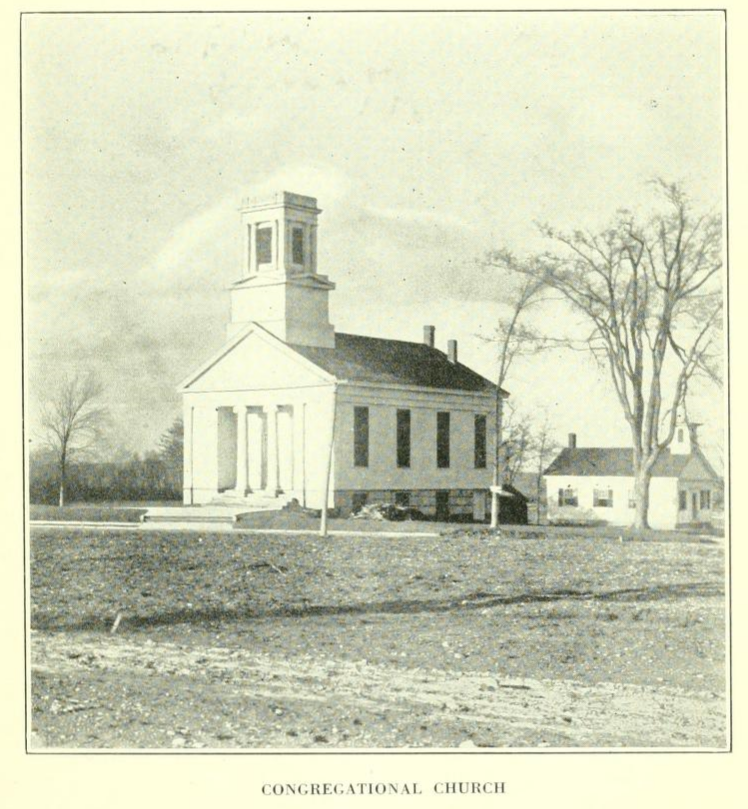
The Town of Bolton was incorporated in 1720 and the town’s Congregational Church was organized in 1725. The first meeting house, located on Bolton Green, was built used for about forty years, being replaced by a new building on the same site in 1767. The second church remained until it too was replaced by the current Bolton Congregational Church, a Greek Revival building with a truncated box-spire, in 1848.

Unionville Bank and Trust Company (1929)

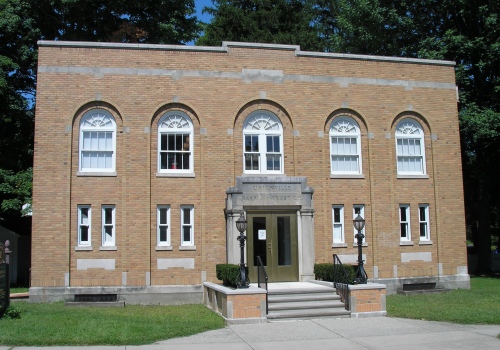
The Unionville Bank and Trust Company was founded in 1922 and a neoclassical building was constructed on School Street in Unionville in 1929. The Bank went into bankruptcy in 1932 and the building has since been used for other purposes, serving as a branch of the Farmington Savings Bank in the 1950s and being converted to offices in the 1960s. (see “Unionville Historic District Study Report,” pdf, p. 35/70).

(more…)

The Cook-Fowler House (1772)

Located across from the Public Library on Main Street in Durham, the Cook-Fowler House is a gambrel-roofed, central-chimney, “Cape Cod“-style cottage. It was built in 1772 by Jesse Cook, a carpenter, a year after his marriage to his third wife, Ann Griswold. Built by himself, the house was later given to Cook’s brother Thomas in 1790. It was later owned by the Lyman family and in 1860 became the home of William Chauncey Fowler, a professor, son-in-law of Noah Webster and author of a number of books, including Memorials of the Chaunceys (1858), The Sectional Controversy (1863) and History of Durham, Connecticut, from the first grant of land in 1662 to 1866 (1866). Two dormer windows were added to the house around 1850.

Cowles-Smith House (1836)

The Cowles-Smith House, at 536 Main Street in New Hartford, was built by Captain Henry Cowles in 1836. A blacksmith’s shop had once stood on the site, part of the grounds of a hotel, inherited by Henry Cowles from his father, Theodore Cowles. After experiencing financial reverses around 1840, Henry Cowles became proprietor of another hotel in Hartford, where he died in 1843. His widow and daughter then returned to New Hartford and occupied the old house until it was sold, in 1845, to John Cotton Smith. An entrepreneur, John C. Smith joined with his brother, Darius B. Smith, to establish the D.B. Smith & Sons cotton mill in Pine Meadow. He was also the agent of the Greenwoods Manufacturing Company. After his death in 1870, his widow continued to live in the house for many years. It is currently used for offices.