
Built around 1830, the John Gilbert House, at 23 North Main Street in Chester, was likely designed by Ithiel Town. The side wing was added in the early twentieth century.
Built around 1830, the John Gilbert House, at 23 North Main Street in Chester, was likely designed by Ithiel Town. The side wing was added in the early twentieth century.

Wilfred Griggs designed the Colonial Revival house at 98 Woodlawn Terrace in Waterbury for Paul D. Hamilton. Built in 1916, the house’s side porch was added around 1950. As described in the History of Waterbury and the Naugatuck Valley, Vol. 3 (1918), “Paul D. Hamilton, president and treasurer of the Hamilton Hardware Corporation, is thus widely known as one of the leading and representative business men of Waterbury, where his entire life has been passed and where he has so directed his efforts as to win not only success but the high and merited regard of his fellowmen.”

The Greek Revival home built in 1848 for Peleg Hancox, Jr. is at 168 Water Street in Stonington Borough. His father, Sgt. Peleg Hancox, served in the militia defending Stonington from the British during the War of 1812.

The Methodist Episcopal Church in Litchfield was established in 1836. Called the United Methodist Church of Litchfield since the 1940s, the congregation’s current church building on West Street was dedicated in 1885.

Adjacent to northeast of the First Congregational Church of Cheshire is a house built around 1835 (1831-1836) for Rev. Joseph Whiting, who served as the first minister in that church building, from 1827 to 1836. The house was owned by a number of ministers over the years. Arthur Sherriff, headmaster of Cheshire Academy from 1923 to 1966, was a later resident of the house, which was sold to the Congregational Church in 1969. The Greek Revival-style house has a later Colonial Revival porch.

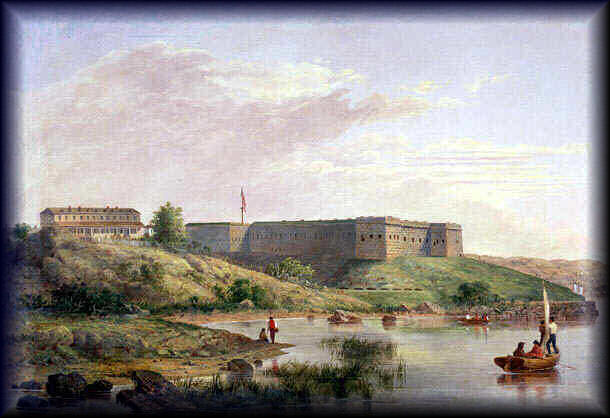
Known as Stone Row, the Officers’ Quarters at Fort Trumbull in New London were built around 1830 and housed military officers for over a century and a half. Until 1910, army officers occupied quarters in the building, followed by officers of the Revenue Cutter Service, the Coast Guard and finally the Navy, who converted it to offices in 1995. The building once had small wood dormer windows, but the Coast Guard replaced these with full-length shed dormers along both sides of the building. In 2000, the structure was adapted to serve as the Visitors’ Center for Fort Trumbull State Park.

The Coopers were early settlers in Hamden. James Cooper built the house at 2052 Whitney Avenue around 1810 (or perhaps as early as 1780). The widow of Cooper’s grandson William married Thomas Hartley in the 1870s and the house remained in the Hartley family for over a half-century.
You must be logged in to post a comment.