Roberts-Barnes House (1783)

On page 44 of Bristol, Connecticut (“In the Olden Time New Cambridge”) Which Includes Forestville (1907) is a picture of the house at 523 West Street in Bristol. The description reads:

The Daniel Roberts House, on West Street. This is the Oldest House on the street, being built in 1783. Since remodelled (sic) and now known as the Seth Barnes Place.

The following page has an image of the house in 1907, showing how much the house had been altered. Today, it looks much the same and serves as the parsonage of the Bristol Calvary Church.

William H. Cardwell House (1880)

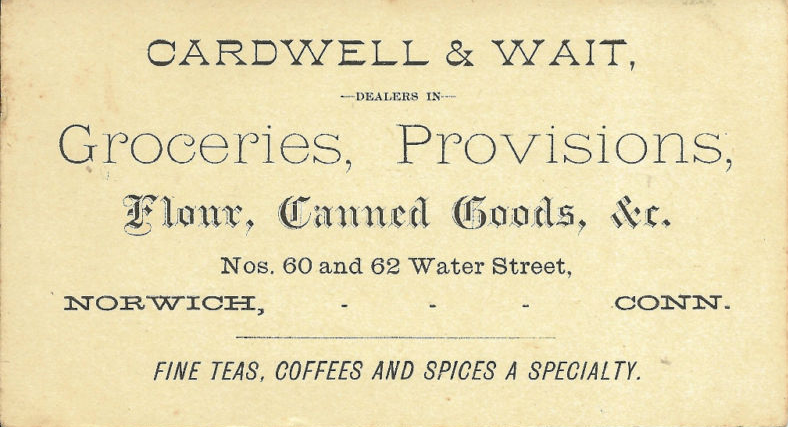
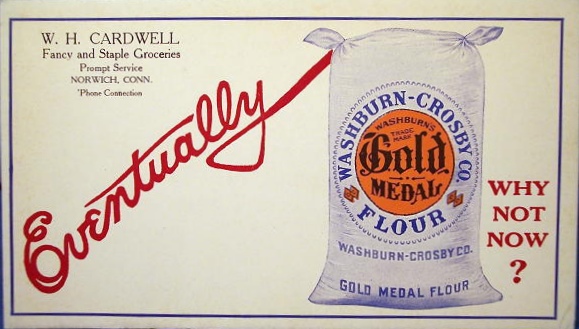
The house at 313 Main Street in Norwich, next to the Buckingham House, is a well-preserved example of the French Second Empire style. It was built for William H. Cardwell, a grocer, in 1880, a date that can be ascertained from the following sentence in Biographical Review Containing Life Sketches of Leading Citizens of New London County Connecticut (1898), “The family live in the large brick residence, 313 Main Street, which was built by Mr. Cardwell eighteen years ago. As described in The Leading Business Men of Norwich and Vicinity, Embracing Greeneville and Preston (1890):

Were we asked to name half a dozen of the most prominent grocery houses in this section of the State, one of the first enterprises we would mention would be that conducted by Mr. W. H. Cardwell, for this was inaugurated fully thirty years ago and has long been looked upon as a representative undertaking of its kind, both as regards the methods employed in its management and its exceptional popularity throughout the community. The proprietor is a native of Montville, Conn., and has been identified with his present business since 1859, originally as a member of the firm of Cardwell & Tracy, later as Cardwell & Wait, and since 1883 as sole owner. He certainly needs no introduction to our Norwich readers, and his enterprising business methods have made him known by reputation at least, throughout this vicinity. The premises utilized are located at Nos. 3 to 9 Market street, and are so spacious as to admit of the carrying of an immense stock, composed of fancy and staple groceries in almost endless variety. This stock is as exceptional in quality as it is in magnitude, and it is generally conceded among consumers that goods obtained at this establishment are sure to prove entirely satisfactory. Mr. Cardwell does both a wholesale and retail business and is prepared to fill the most extensive orders without delay and at positively the lowest market rates. He employs four experienced and efficient assistants and every facility is at hand to ensure the prompt handling of goods.

His store was located in the Rockwell Building in downtown Norwich (featured in yesterday’s post). The Cardwell family owned the house into the twentieth century. Today, it is a halfway house for men run by the Southeastern Council on Alcoholism and Drug Dependence, Inc.

Rockwell Building, Norwich (1860)

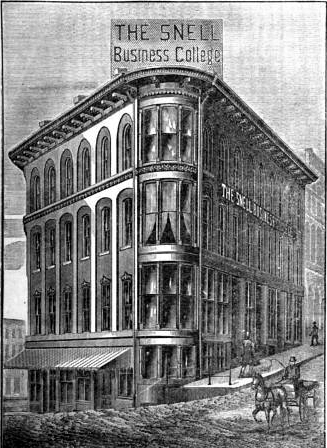
The Rockwell Building is a distinctive flatiron-type structure at 97 Main Street, with storefronts facing Main and Market streets in downtown Norwich. Associated with John A. Rockwell, a lawyer who lived with his family in the Wauregan Hotel, the Rockwell Building was built around 1860 in the Romanesque Revival style. It has an impressive cast iron addition, designed by C. H. Preston in 1895. In 1890, when the building was home to the Snell Business College, it was described in The Leading Business Men of Norwich and Vicinity, Embracing Greeneville and Preston as follows: “This is a handsome building, made of Philadelphia pressed brick, with white granite casings, situated in the very heart of the city, commanding a perfect view of the harbor and the city’s principal thoroughfare.” (more…)

Azel Backus House (1750)

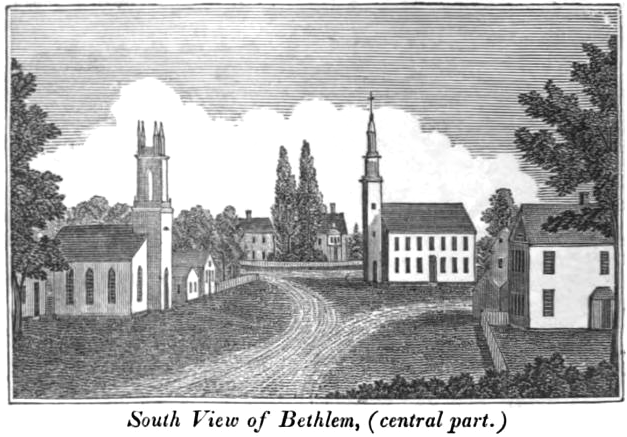
In the view of Bethlem (Bethlehem) by John Warner Barber in his Connecticut Historical Collections (1836), the homes of the town’s first two Congregational ministers can be seen in the distance, behind a fence to left of the Congregational church. To the right is what is now called the Bellamy-Ferriday House, home to Rev. Joseph Bellamy. To the left of Rev. Bellamy’s house is that of his successor, Rev. Azel Backus, who served as minister from 1791 until 1812, when he became the first president of Hamilton College in New York. His former home in Bethlehem, built around 1750, was later moved from where it stood in Barber’s image to the nearby corner of East Street and Main Street South, just off Bethlehem Green. In the early twentieth century, it was home to Dr. William Doolittle and was called Doolicor (Doolittle’s Corner) Place (named as such in a pdf file of a 1934 listing of members of the American Public Health Association).

Church of the Epiphany, Southbury (1867)

An Episcopal Church in Southbury was established in 1843 at a meeting in the Bullet Hill School. Organized as the Church of the Resurrection, it was renamed the Church of the Epiphany in 1858. According to the History of New Haven County, Connecticut, Vol. II (1892), edited by J. L. Rockey, “The corner stone of the church, on the Shadrach Osborn lot, was laid November 5th, 1863, and the church was consecrated by Bishop Williams September 19th, 1867.” The main part of the building is stone, but the belfry is made of wood.

Loomis Homestead (1640)

The oldest house in Windsor is the Loomis Homestead, located on the campus of Loomis Chaffee school. The oldest part of the house is now the south ell, built by Joseph Loomis in 1640. His son, Deacon John Loomis built the main section in 1688, the year he died, possibly for his son Timothy. In the 1870s, planning began for what would become Loomis Chaffee, established by five Loomis siblings, children of Colonel James Loomis and Abigail Sherwood Chaffee, who had all lost their own children. The school’s first buildings, completed in 1913-1916, were designed to match the axis of the Loomis Homestead, several degrees off of true north. The old house itself remained in the Loomis family until Miss Jennie Loomis deeded it to the Loomis Institute in 1901. She continued to reside in the house until her death, in 1944. Then it became a residence for a member of the Loomis Chaffee School faculty and continues as a museum and memorial to the Loomis family.

Tolland County Courthouse (1822)

Built in 1822 on Tolland Green, the old Tolland County Courthouse replaced an earlier building built in 1785. Like the county jail across the Green, the courthouse was built by public subscription. It was designed by local architects Abner P. Davidson and Harry Cogswell and was built on a lot acquired from Calvin Willey, which had previously been the site of a tavern owned by Wilkes Williams. The last court session was held in the building in 1892 (the court was transferred to Rockville). From 1899 to 1985, the building housed the Tolland Public Library. In 2001, the Library gave the old building to the Tolland Historical Society. The second floor has been restored to a working courtroom appearance and there are also exhibits on the history of the building. The first floor of the old courthouse contains the library of the French Canadian Genealogical Society Of Connecticut.