
By the early nineteenth century, Hopevale, or Hope Valley, located in the Town of Hebron, was an active area for farming as well as manufacturing along the local streams. There were also camp meetings, held on the shores of Barber’s Pond, one of which in 1823 lasted for a full week of preaching. The earliest Methodist Churches in Hebron were one built c. 1805 on Burrows Hill and taken down in 1845 and the 1838 church on Hebron Green that later became the Town Hall. Another Methodist church was established in Hopeville, as related in the Souvenir History of the New England Southern Conference in Three Volumes (1897):
In the year 1849 the church property, situated in what was then called Hope Valley (now Hopevale), was deeded by David Chapman to the trustees in trust for the use of the Wesleyan Methodist Society, and the deed was recorded in the Hebron Town Records.
For some years thereafter that denomination sustained services until unable to do so longer on account of members dying or removing. For some years previous to the year 1881 preaching was sustained by the Methodist Episcopal denomination, but only at the rate of twelve Sabbaths per year, preachers coming from Colchester or Marlborough.
At the Willimantic Camp Meeting in the year 1881 a religious interest was started among the people of Hopevale. Soon afterwards Brother Kathan, laboring among the people, was rewarded by seeing a number converted. One of the results of this revival was an earnest desire to form a Methodist Episcopal Church in this place. Consequently, Sunday, October 10, 1881, Mr. Mitchell formally received into the church Mr. and Mrs. David Johnson and Mrs. Sarah Thompson, the only survivors of the Wesleyan Methodis Society, then living in Hopevale. He also received a number of others by letter and from probation, and baptized and received seven others on probation.
The church property was deeded to a board of trustees for the use of the Methodist episcopal Church February 3, 1882. and the deed recorded in the Hebron Land Records. In the spring of 1882 the church was repaired, painted, papered and a new bell, carpet, lamps, chairs and organ purchased. The church was rededicated September 3, 1882, by Presiding Elder H. D. Robinson.
Since the organization of the church, services have been held regularly, with the exception of three years, when it was closed for want of funds.
[. . .] The church membership has been small, never numbering more eleven by removals and deaths.
[. . .] The quaint Communion Service which was used in the old church is still in good condition, and is used at the present time in Communion Services. It is said that the first Camp Meeting held in Connecticut was held in a grove about one mile from this place.
As related in an historical address by Cyrus H. Pendleton, on the occasion of Hebron’s Bicentennial in 1908:
Of the subsequent history of this church I have been able to obtain scarcely anything definite. There would now seem to be in connection with it no regular church organization, and the trustees are now all residents of Colchester, and services are held in the church just sufficient to use up the income of a small fund bequeathed by Samuel Skinner, a former resident of Hebron, and a member of the Methodist Church on the green.
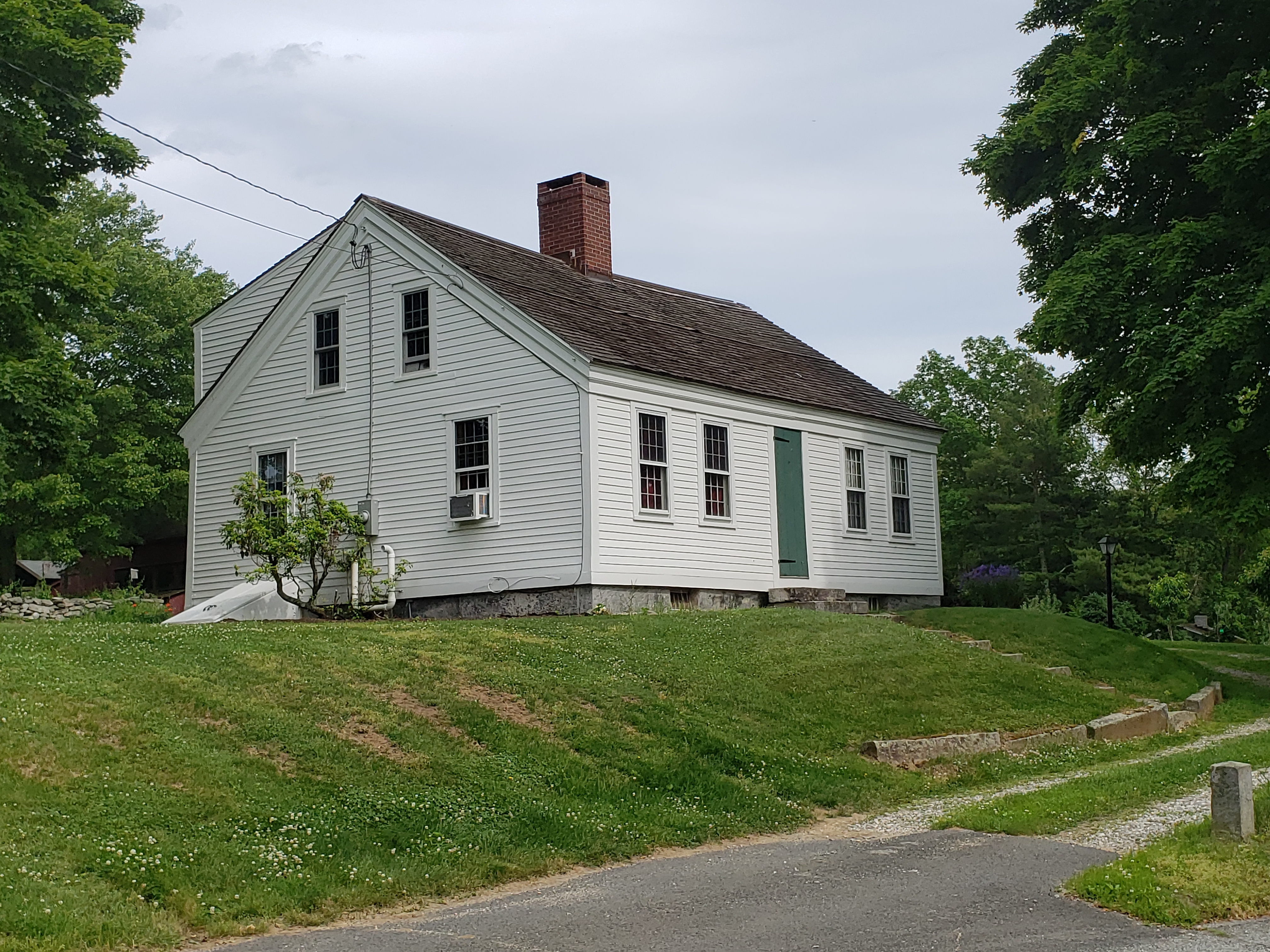
The church building was also used in the late nineteenth century by the Seventh Day Adventists. Adjacent to the church is a house (built c. 1790-1810), at 29 Reidy Hill Road, that once housed the Adventist school. The church, located at 21 Reidy Hill Road, is now known as the Hope Valley Church.
(more…)



You must be logged in to post a comment.