Frank S. Brown House (1880)

frank-s-brown.jpg

The Queen Anne style house of Frank S. Brown, on Hartford Avenue in Wethersfield, was built sometime in the 1880s. Brown was a Hartford merchant who, in 1866, joined with James M. Thomson and William McWhirter to form the dry goods firm of Brown, Thomson & Co., which became a major New England department store. Brown retired from the company in 1890 and in 1893 the house was sold out of the Brown family. Ellsworth S. Grant, the Connecticut historian, former mayor of West Hartford and brother-in-law of Katharine Hepburn, was later born in the house. In 1920, Minnie Pricone and Mary Rometta, with their husbands and families, moved into the house. They owned the Marie Phillips Dress Company and tailoring work was done in the basement area of the house.

This blog has been featured on the Historical Home blog. Check it out!

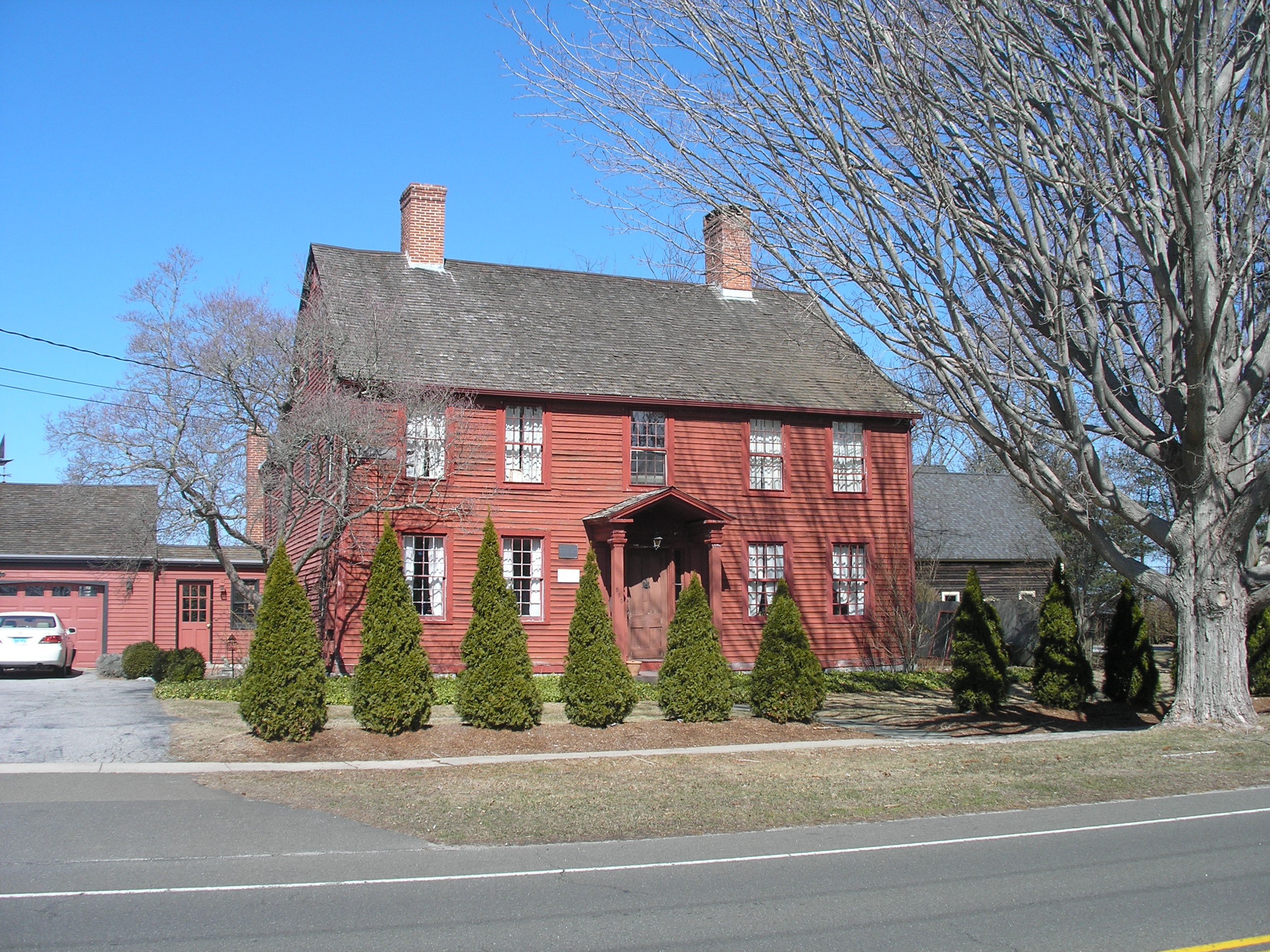
Rev. Samuel Seabury House (1792)

rev-seabury-house.jpg

On Greene’s Alley in New London is the home of Reverend Samuel Seabury, which was built around 1792. Rev. Seabury was an Episcopal minister and a loyalist during the Revolutionary War, who was selected at a 1783 meeting in the Glebe House in Woodbury to become the first American Episcopal Bishop. Rev. Seabury also lived in an earlier house, built in 1743 (unless it’s the same house?). After his death, in 1796, he was succeeded as rector of St James Church in New London by his son, Rev. Charles Seabury.

First Baptist Church in Essex (1845)

first-baptist-church.jpg

The Baptist Church in Essex was founded in 1811. The congregation’s first church was a brick building, built in 1817, which stood across Prospect Street from Hill’s Academy. In 1845, a new church was built, adjacent to the Academy on Baptist Hill. Constructed by master builder Jeremish Gladding, the Baptist Church was designed in the Egyptian Revival style, modeled on an 1844 Presbyterian church, the Old Whaler’s Church in Sag Harbor, Long Island, designed by Minard Lafever. Both of these buildings are interesting examples of a style not often used for churches in America. The church’s original steeple was destroyed after being struck by lightning in 1925. It was replaced by the current steeple, a Colonial Revival structure which features a gold dome and a variation on a ‘Widow’s Walk” below.

Robert Pratt Homestead (1716)

robert-pratt.jpg

The Robert Pratt House, on Route 154 in Centerbrook consists of a main Georgian-style center-chimney house with a smaller wing on the west side. It is possible that the wing was built first, by Robert Pratt, Sr. around 1716. The main part of the house was built around the time Nathan Pratt sold the house to Rev. Stephen Holmes in 1758. Rev. Holmes was the second pastor of the Second Ecclessiastical Society of Saybrook, located in Potapoug, which is now the village of Centerbrook in the town of Essex. As explained in the History of Middlesex County (1884), the Reverend, who died in 1773, “practiced medicine in addition to preaching the gospel.”

The Welles-Chapman Tavern (1776)

welles-chapman-tavern.jpg

The Welles-Chapman Tavern, on Main Street in Glastonbury, was moved from the west to the east side of the street in 1974, when the Glastonbury bank expanded. In the late-eighteenth and nineteenth centuries, the tavern was the stop-over for coaches traveling between Hartford and New London. The tavern (which was also the town’s first post office) was built in 1776 by Joseph Welles. It was purchased by Azel Chapman in 1808. Today, it is owned by the Historical Society of Glastonbury, who have rented it out to a number of tenants, currently the Glastonbury Chamber of Commerce.