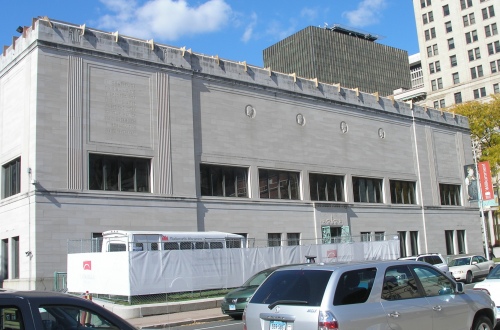
Central Baptist Church, Hartford (1926)

In this post I’m trying something new: many of the links embedded below point to articles from the Hartford Courant from the 1920s, available at iconn.org (for those with a Connecticut Library Card).

There were once two Baptist Churches on Main Street in Hartford. The First Baptist Church, originally located (from 1798 to 1831) at the corner Market and Temple Streets, moved to a second building on Main Street and finally to a third, at Main and Talcott Streets. The South Baptist Church had two edifices, the first built in the 1830s and the second, at Main and Elm, dating to 1854. In the 1920s, the two Baptist churches united to form the Central Baptist Church. Worship services continued at the First Baptist Church, while the former South Baptist Church was demolished and a new church built on the site for the combined Central Baptist congregation. While many other churches at the time had been moving to neighborhoods to the west, the Baptist Church, after considering such a move for financial reasons, decided to remain on Main Street. Ground was broken in 1924, the cornerstone was laid the following year and the completed church was dedicated in 1926. Designed by Isaac A. Allen, the church would contain a large auditorium and gymnasium.

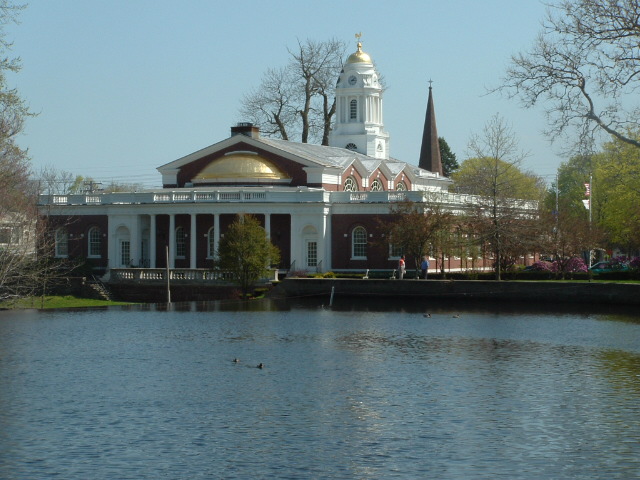
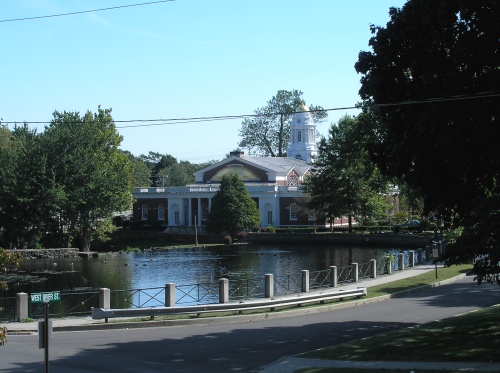
Harwinton Community Hall (1916)

Built in 1915-1916, Harwinton‘s Community Hall off Harwinton Green originally served as the town hall. Consisting of a brick story on a high granite ashlar foundation, this architecturally eclectic building features Greek columns and a very large Gothic pointed arch window. This structure replaced an earlier building from the 1840s, which had served as both town hall and Episcopal Church.

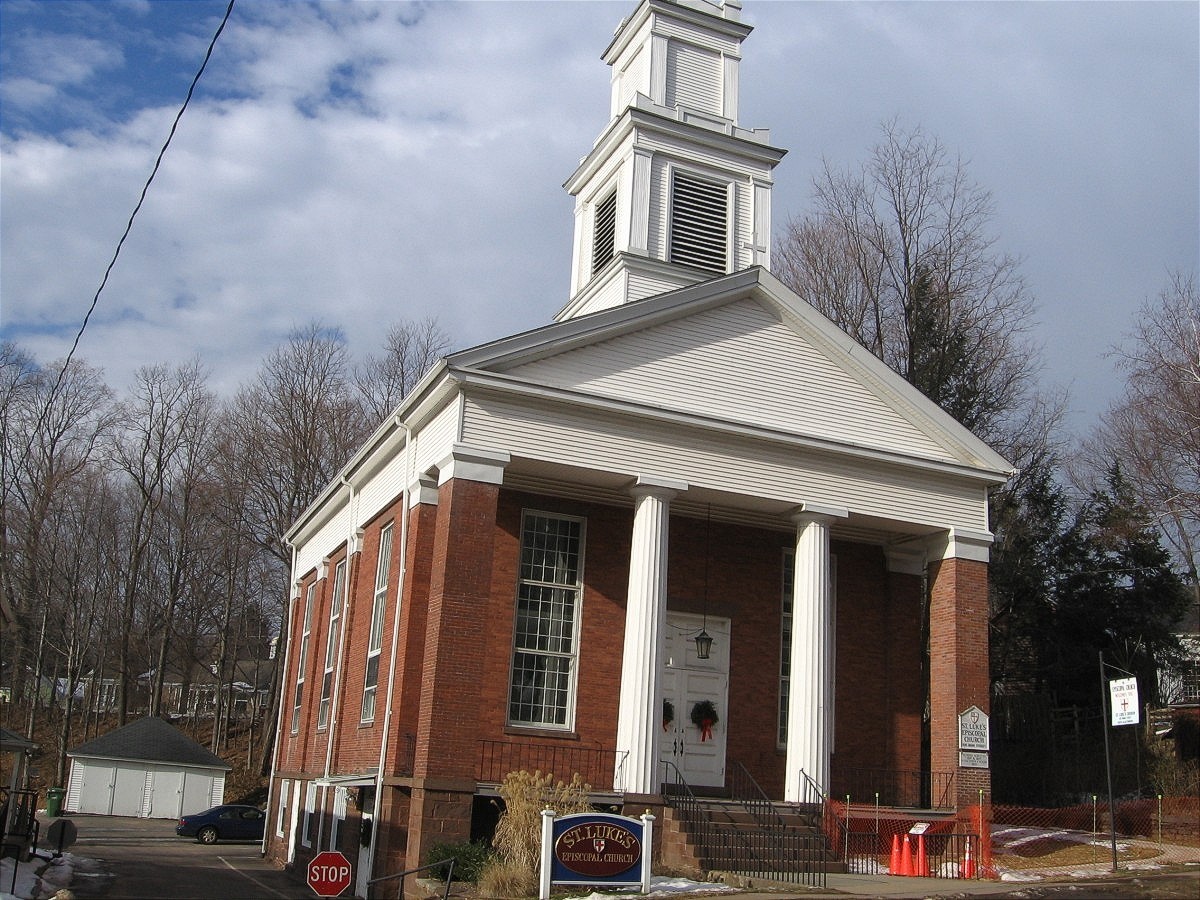
Little Boston School (1805)

The Little Boston School in East Lyme was first established in 1734. There is a surviving Little Boston School House that was built around 1805 and originally stood on the north side of West Main Street. The school was run by the Second Ecclesiastical Society of Lyme until 1856 and from then until 1922 by the Town of East Lyme. After closing as a school, the building was donated to the East Lyme Historical Society in 1926 and moved to a new location, adjacent to the Thomas Lee House. Restored to an early twentieth-century appearance in 1973, the school house is now a museum.

Joseph Jones House (1776)


According to a sign on the Joseph Jones House on Norfolk Green, it was built in 1776 (although according to another source, the house was built in 1780). Again, according to the sign, Jones was a tailor, town clerk and postmaster in Norfolk and served in the Revolutionary War. He married Abigail Seward in 1772. As related in the History of Norfolk, Litchfield County Connecticut (1900), compiled by Theron Wilmot Crissey:

The post office was kept in this house for a number of years. Mr. Jones was the post-master in 1816, at the time of the ordination of Mr. Emerson, and died in 1832 at the age of 82. His record as a soldier in the revolutionary army is mentioned in that connection. Before he went into the army Mr. Jones had the frame of his two story house up to the rafters. Upon his return from the war he felt too poor to build a two story house. so he cut off the posts and made it one story, as it is today. Some of the later occupants, who were tall people used often to wish, as they bumped their heads in those low chambers, that Mr. Jones had not cut off those posts so short. A child was born to Mrs. Jones soon after he entered the army, which he never saw till it was three years old, as he did not return home in all that time.

Linden Hall (1857)

Gamaliel King (1795-1875) was a New York City architect who designed four houses in Stonington, by the shores of Lambert’s Cove. The house of James Ingersoll Day was lost due to the Hurricane of 1938, but the other three survive. One is the Nathaniel B. Palmer House of 1852 and another is Cove Lawn, built in 1856 for Captain Theodore Dwight Palmer. The third is Linden Hall, also known as the Stanton House, built in 1857 to 1859 for brothers Joseph Warren Stanton and Charles Thompson Stanton.

Gen. Daniel Baldwin House (1791)

Traditionally called the Gen. Daniel Baldwin House, the house on Main Street at Church Hill Road in Newtown, consists of an earlier section in the rear, dating to 1712 and built by Job Sherman, and the Federal-style front section, built in 1791 by Joseph Nichols. The house was later owned by David Van Buren Baldwin, grandson of Caleb Baldwin, who operated the nearby Baldwin Tavern. It has the most elaborately detailed facade of the eighteenth-century houses in the Newtown Borough Historic District.