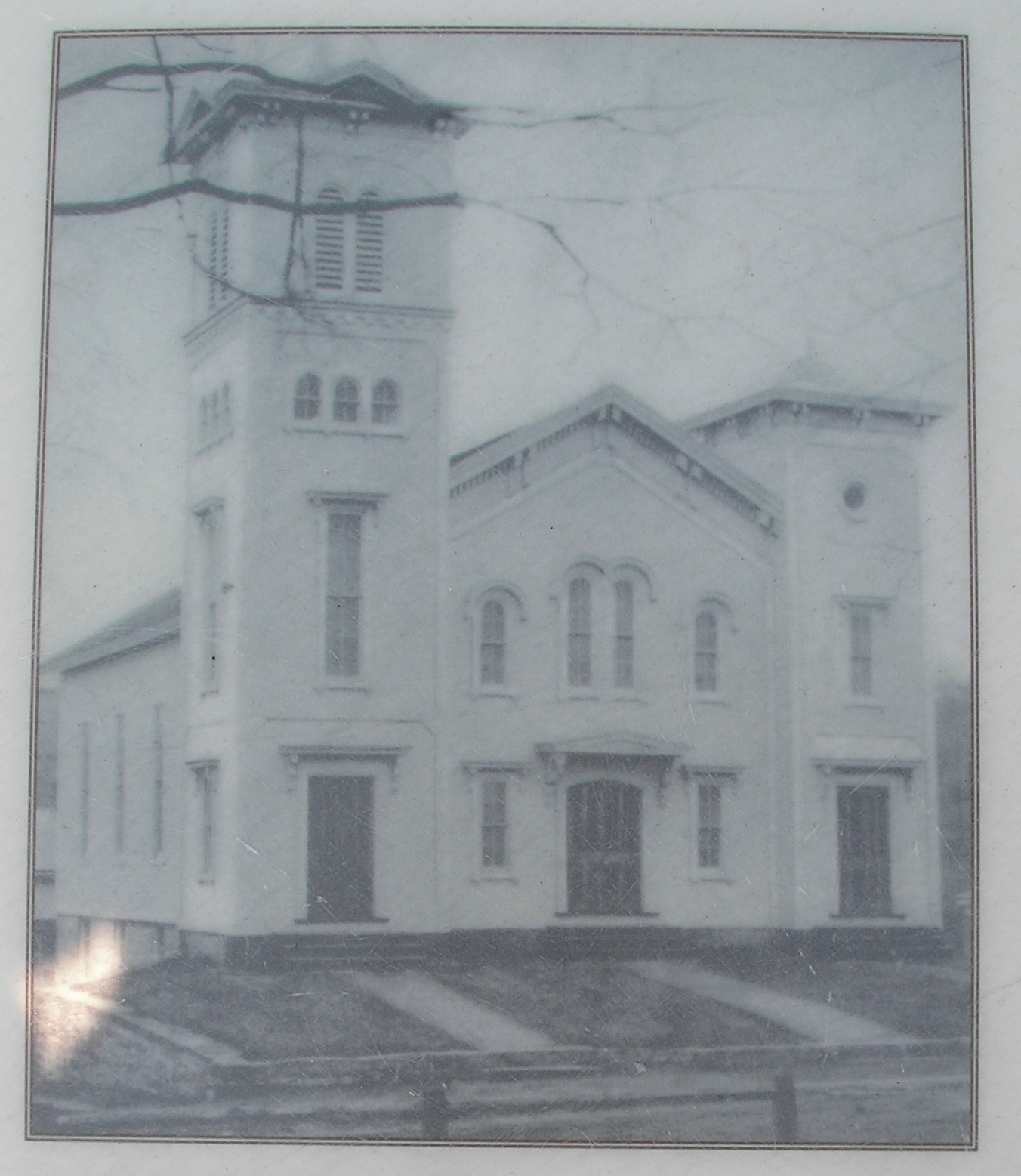
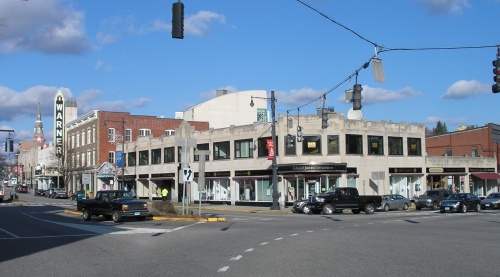
St. James Episcopal Church, Haddam (1873)

St. James Episcopal Church is located at the intersection of Killingworth and Ponsett roads in Haddam. A Carpenter Gothic building, Saint James’s was constructed between 1871 and 1873. The church was organized by Rev. William Clark Knowles, who had begun a Sunday School in his home on Hubbard Road in 1861 and held the first service of the Ponsett Episcopal Church around 1866. For thirty-six years, Rev. Knowles served as pastor of both St. James’s and Emmanuel Episcopal Church in Killingworth. A resident of the Haddam village of Ponsett until his death in 1933, at the age of 92, Rev. Knowles was the author of By Gone Days of Ponsett, published in 1914.

Avery Lamb House (1841)

Prospect Street in New London is notable for being a well-preserved example of a mid-nineteenth century streetscape, with houses in the Greek Revival style predominating. Sabin Smith laid out Prospect Street in 1837 and then proceeded to sell his holdings. In 1841, Avery Lamb, a cooper, hired builder Lewis Crandall to build two houses, at nos. 16 and 20. Lamb sold the former, but the latter, 20 Prospect Street, became his own house. (Note: the sign on the house itself displays a date of 1836.) (more…)

Allen Building, Torrington (1930)

The Allen Building in Torrington is an Art Deco commercial structure, occupying a prominent location, at the corner of Main and East Main Streets in the city’s downtown. The building, designed by Torrington architect William E. Hunt (who designed other art deco buildings in Torrington), was constructed in two sections. First came the north part, on Main Street, in 1930. It was built next door to the Allen House, a wood-frame hotel erected in the nineteenth century. After the hotel was damaged in a 1934 fire, it was demolished and replaced, in 1935, by an extension of the Allen Building that wraps around the corner of East Main Street.

Alsop-Weeks House (1780)

At 202 Washington Street in Middletown is a house that has gone through a number of stylistic changes over two centuries. Known as the Wetmore-Weeks or Alsop-Weeks House, it was built around 1780 by Chauncey Whittlesey, wealthy merchant and supporter of the American Revolution. The house was later owned by Charles R. Alsop, developer of the now rare Alsop Pocket percussion revolver. Alsop, who also served as mayor of Middletown (1843-1846) and state senator (1855), made alterations to the house around 1840, remodeling the Georgian-style building in the then-popular Gothic Revival style. Later in the nineteenth century, the Atwater family remodeled the interior of the house in the neo-Federal style. They sold it to Frank B. Weeks, who had just served as governor of Connecticut from 1909 to 1911. After his term, Weeks became a trustee of Wesleyan and bequeathed the house to the University at his death in 1935. The house has since been a student residence. A rear addition was constructed in 1966.

Court Exchange Building (1896)

The Court Exchange Building, at 211 State Street in Bridgeport, is a grandiose commercial structure, built in 1896. It was built by C. Barnum Seeley, the grandson of P.T. Barnum. The great showman, who had no sons, wanted the family name to continue and so he had provided that C. H. Seeley would receive the sum of $25,000, in addition to his portion of his grandfather’s estate, if he added Barnum to his name. For the Court Exchange Building, Seeley hired architect George Longstaff, whose extravagant plans caused building costs to skyrocket. The top floor became the headquarters of the Algonquin Club, which moved to a new clubhouse on Golden Hill Street in 1931. The Club disbanded around 1998. (more…)

Waterbury American Building (1894)

On the night of February 2-3, 1902, a massive fire destroyed nearly all of downtown Waterbury. One of the survivors of the conflagration was the facade of the Waterbury American Building on Grand Street. The Richardsonian Romanesque building had been constructed in 1894 to the plans of Theodore B. Peck, who also designed the Apothecaries Hall building, constructed the same year in Waterbury. The American newspaper was started in 1844 and merged with the Republican in 1924 to become the Republican-American.

Former Methodist Church, Essex (1849)

At the corner of Prospect and Main Streets in Essex is a former Methodist church, built in 1849. The Methodists had earlier used a smaller building, also located on Prospect Street, that had been built in 1827. The 1849 church was used until the Methodist Society disbanded, at which time it was given to the Essex Fire Engine Company in 1945. When the existing firehouse was enlarged rather than being moved into the former church, ownership of the building reverted to the town. It was sold to Verplex Realty Company in 1949 and used as a warehouse for many years. The building was later sold again and was eventually converted into a residence. The original steeple has been replaced by a much shorter cupola with glass walls.