Chapel, Avon Old Farms School (1922)

OLYMPUS DIGITAL CAMERA

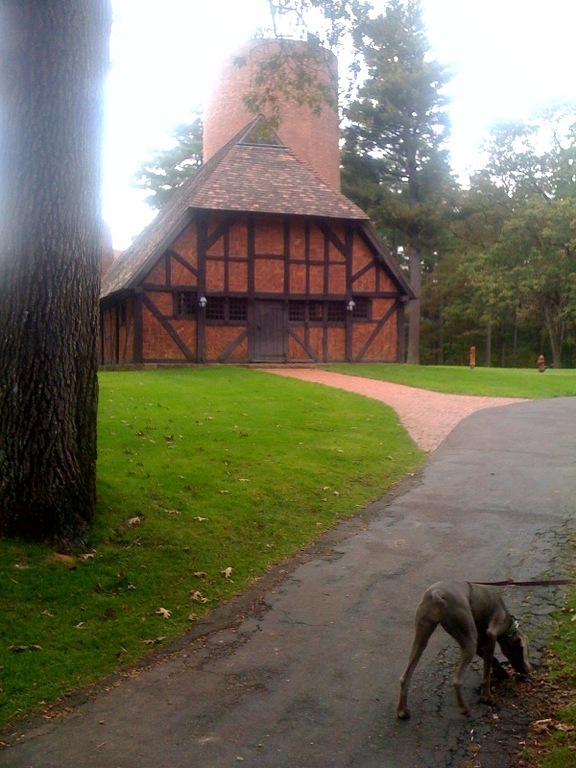
One of the first buildings to be constructed at Avon Old Farms School in Avon was a carpentry shop (other early buildings were the Water Tower and Forge). The carpentry shop was later turned into the school’s Chapel in 1948 and named the Chapel of Jesus the Carpenter. The school buildings were designed by Theodate Pope Riddle, who utilized craftsman from the Cotswolds in England to construct buildings in a traditional English country manner. The carpentry shop is a half-timbered structure of brick nogging resembling similar buildings found in English villages that Theodate Pope Riddle had visited. Originally, students sat in the chapel on seats that faced each other along its length. The Chapel underwent a major renovation in 1999: the roof was restored and a new organ was installed inside. Next to the Chapel is a wooden cross, made in the early 1950s with hand tools using timber grown in the school’s woodland’s. It was placed in its current location when the Chapel was renovated in 2000. A tablet notes that it is dedicated to the memory of Donald W. Pierpont, Provost (Headmaster) from 1947 to 1968.
(more…)

Trumbull College, Yale University (1929)

Trumbull College, Yale

Trumbull College, one of Yale University’s residential colleges, was named for Connecticut Governor Jonathan Trumbull. The building‘s Gothic architecture, by James Gamble Rogers, matches well with his design for neighboring Sterling Library. Rogers, who designed eight of Yale’s twelve residential collages, considered Trumbull College, modeled after King’s College, Cambridge, to be his masterpiece.

Hall-Camp House (1773)

Hall-Camp House

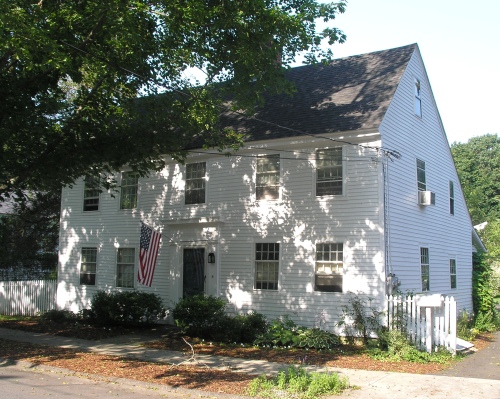
The Hall-Camp House, on Main Street in Durham, is a Colonial center-chimney saltbox house, built just before the start of the Revolutionary War. It was built on land that Daniel Hall received from the estate his father, Timothy Hall, in 1773. Hall was a leading citizen of Durham who was a delegate to the Convention to adopt the Federal Constitution. He sold the property to Heth Camp in 1783 and it remained in the Camp family until 1900.

Talcott Brothers School (1880)

Talcott Brothers School

Talcottville in Vernon was once a mill village based around the Talcott Brothers Company’s cotton-spinning mills. In mill villages, like Talcottville, the company would provide its workers with housing, as well as other services, like a library, a store and a school. The Talcott Brothers built a Romanesque Revival-style one-room school house in 1880 at 97 Main Street in Talcottville. It replaced the company’s earlier school house of c. 1860, which according to tradition, was moved across the street and became a residence. The Talcott Brothers School became part of the Rockville school system in the 1950s.