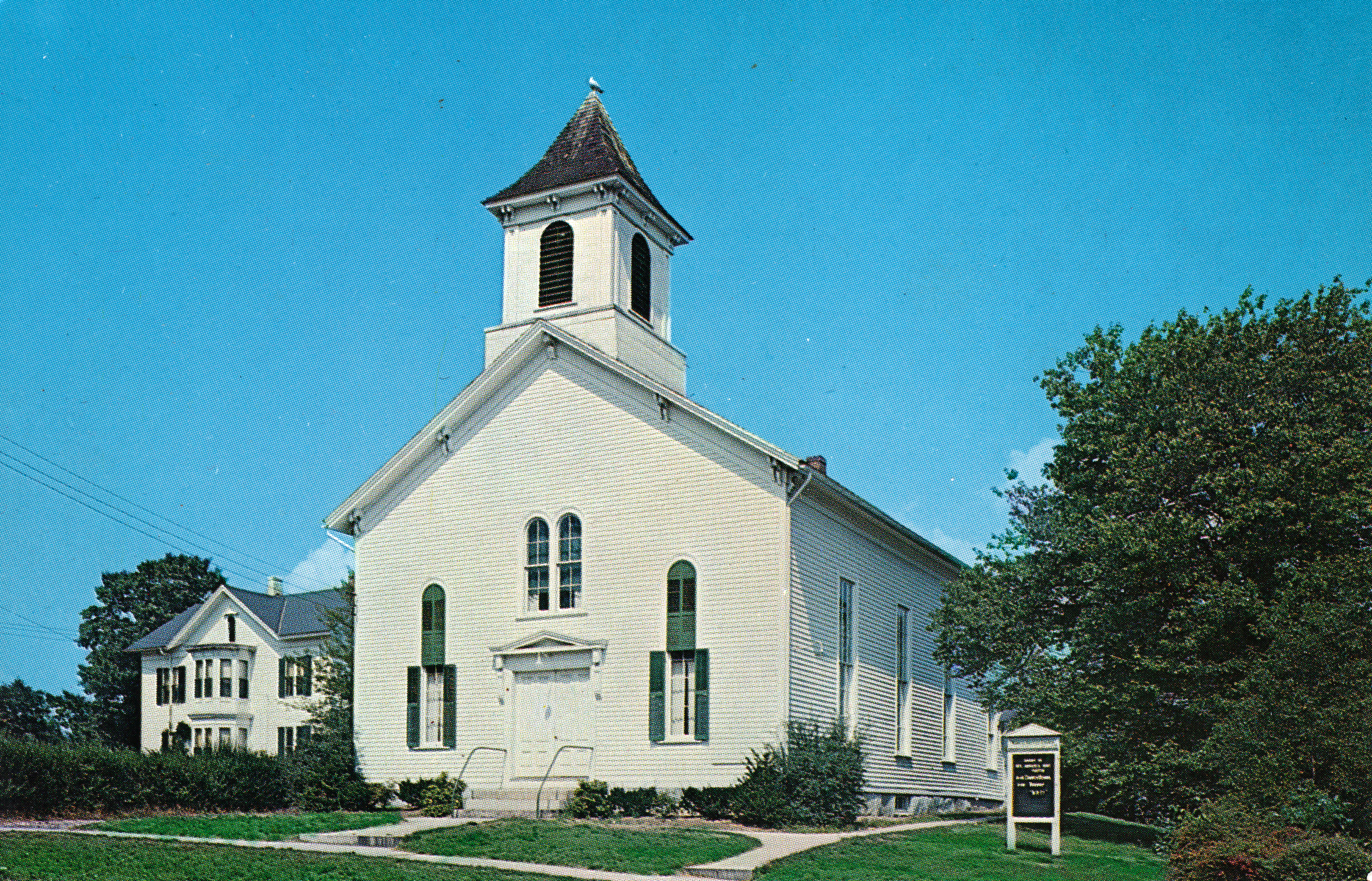
Jordan Park House (1928)

Jordan Park House

The building now known as the Jordan Park House was originally built in 1928 as the Waterford Public Library. A gift of Mrs. Edward C. Hammond, it was located on Great Neck Road in Waterford, but was moved in 1961 to make way for a new railroad overpass. A new library on Rope Ferry Road opened in 1966. The old library building was transferred to Jordan Park, where it would soon be joined by other relocated historic structures: the 1740 Jordan Schoolhouse and the 1838 Beebe-Phillips House. The Jordan Park House was home to the offices of the Waterford Recreation and Parks Department until 1984 and since then to the Waterford Historical Society.

Saint Mary of the Immaculate Conception Church, Baltic (1911)

Saint Mary of the Immaculate Conception Church

As an industrial village in the nineteenth century, Baltic, in the town of Sprague, became a regional center for the Catholic Church in eastern Connecticut. Buildings constructed for Saint Mary of the Immaculate Conception Parish (founded in 1886) include St. Mary Convent, built in 1888, and the Academy of the Holy Family, built in 1914. The Georgian Revival-style church was built in 1911.

Ives Building (1877)

Ives Building

The brick commercial building at 2977 Whitney Avenue in Hamden was built in 1877 (or possibly earlier, circa 1853, unless it replaced an earlier building on the site) by James Ives (1815-1889). A prominent manufacturer and developer of local business, Ives operated a factory, built by his father Elam Ives, on the Farmington Canal that produced brass carriage hardware. He later built a new factory on the Mill River. He also engaged in other manufacturing endeavors, including the Mt. Carmel Screw Works. The area around the factory was known as Ivesville and the intersection of Whitney Avenue and Ives Street, where the Ives Building is located, is known as Ives Corner. Ives rented out the building as a general store. There was also a post office, where Ives’ brother Lucius was postmaster, and a meeting hall in the building. After 1913, the building was home for many years to Levine’s Market. In 1934, Sydney Levine devoted a section of the market to the sale of alcoholic beverages, a business which has since grown into today’s Mt. Carmel Wine and Spirits. (more…)

Lucerne (1906)

Lucerne is the name of the castle-like mansion at 20 Davis Street in Hamden. Designed by the architects Brown and Von Beren, it was built in 1906 for Frederick D. Grave. A German immigrant who arrived in America in 1861, Grave learned the cigar trade and in 1884 founded his own company in New Haven. Still in business, the company has been known since 1911 as F.D. Grave & Son. The mansion is now home to the architectural offices of Kevin Roche John Dinkeloo and Associates.

Rev. Nehemiah Prudden House (1783)

Rev. Prudden's House

The house at 1370 Enfield Street in Enfield was built in 1783. It was a wedding present from Capt. Ephra[h]im Pease (who lived next door) for his daughter Agnes (1760-1799), who married Rev. Nehemiah Prudden (1749-1815), minister at Enfield’s Congregational Church. After Agnes died, Rev. Prudden married her sister, Sybil (1754-1822), who was the widow of Prudden’s predecessor as minister, Elam Potter (1742-1894). (Potter had been dismissed as minister following a religious controversy in 1776.) In 1811 a volume by Rev. Prudden was published in Hartford with the title: To Marry a Wife’s Sister Not Inconsistent with the Divine Law.

Salem Town House (1749)

Salem Town House

Another notable building along Salem Green is the Town House. This structure was originally built in Norwich in 1749 on Washington Street as an Episcopal church, which later took the name of Christ Church. A new Christ Church was dedicated on Main Street in 1791. The current Christ Episcopal Church was built back on Washington Street in 1849. By that time, the original church on the site had been moved away. In 1829, this old building had been sold to the Episcopal Society in Salem. It was moved to Salem Green circa 1831 and reconstructed. It was at this time that the building’s lancet windows and columned portico were added, resulting in an unusual mix of Gothic and Greek Revival styles. By 1840 the church had closed and the building was acquired by the Town of Salem for general meetings. Since 1969, it has been the home of the Salem Historical Society.