Edmond Town Hall, Newtown (1930)

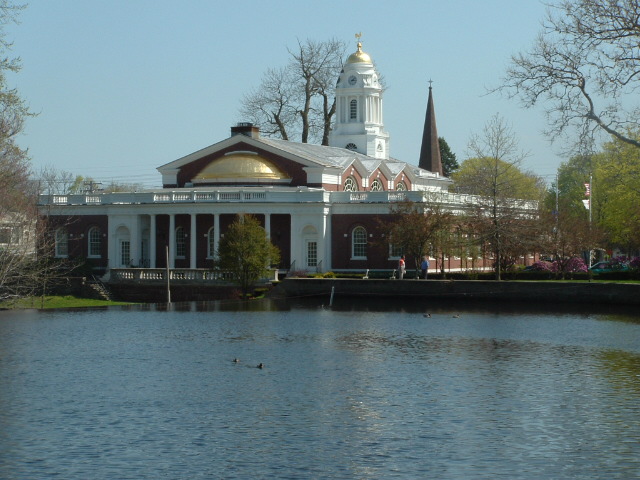
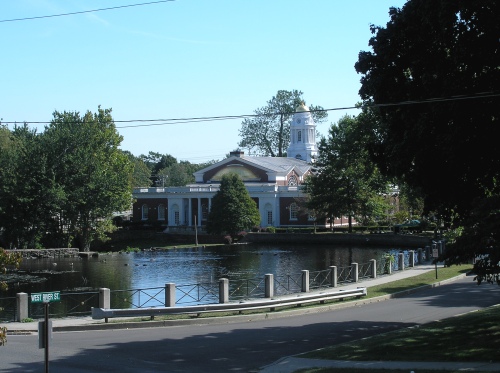
Dedicated in 1930, Newtown’s Edmond Town Hall is a multipurpose building which, in addition to town offices, has a banquet hall, gymnasium, meeting rooms and even a movie theater, the only $2 movie theater in Connecticut. The building was the gift of Mary Elizabeth Hawley and was named after her maternal great grandfather, Judge William Edmond. Miss Hawley also donated the town’s Cyrenius H. Booth Library. Both the library and the town hall were designed by achitect Philip Sutherland.

Harwinton Community Hall (1916)

Built in 1915-1916, Harwinton‘s Community Hall off Harwinton Green originally served as the town hall. Consisting of a brick story on a high granite ashlar foundation, this architecturally eclectic building features Greek columns and a very large Gothic pointed arch window. This structure replaced an earlier building from the 1840s, which had served as both town hall and Episcopal Church.

Old Town Hall, Enfield (1775)

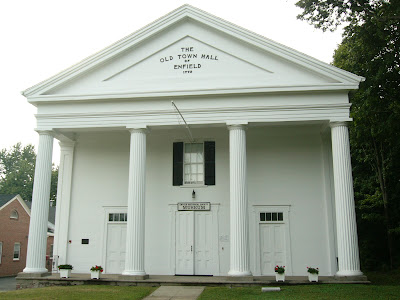
The Old Town Hall of Enfield was originally built in 1775 as the Enfield Congregational Church’s third meeting house. By 1848, the building had become overcrowded and the current church was built the following year. With funds from businessman businessman, Orrin Thompson, the old meeting house was converted into the town hall. The building was altered with the removal of the steeple and the addition of a Greek Revival-style front portico. A new town hall was built in 1892 and the old building was neglected until 1923, when it became a community house. The building was later threatened with demolition, but between 1972 and 1980 it was restored by the Enfield Historical Society and then opened as the Old Town Hall Museum.

Naugatuck Post Office (1916)

In contrast to the many other Classical Revival buildings nearby in Naugatuck Center, the Naugatuck Main Post Office was constructed with elements of the Spanish Colonial Revival style, most notably a Spanish tile roof. Built in 1916, the Post Office was designed under the supervision of James A. Wetmore, Acting Supervising Architect for the Federal Government. It was one of the first post offices to be built under the Public Buildings Act of 1913.