Giles H. Alford House (1894)

Giles H. Alford House

The house at 106 Windham Street in Willimantic was built in 1894 for Giles H. Alford (1827-1900). Born in Otis, Massachusetts, Alford studied at the Westfield Normal School and became a teacher in Windsor. As described in the Commemorative Biographical Record of Tolland and Windham counties, Connecticut (1903):

In 1851 Mr. Alford went to Riverton, Conn., to take a position as clerk in the store of his uncle, Alfred Alford, who was extensively engaged in the furniture business at that point. At this time he made his first visit to Willimantic, part of his work being to deliver a load of chairs to a customer in that city. After a short time spent with his uncle, Mr. Alford bought out the Union Shoe Co., of Riverton. then comprising a general store, and this was his first business venture. Although he incurred a heavy load of debt, he pulled through, and became the sole owner of the establishment. During the first years of the Civil war Henry Alford cared for the store while Giles H. Alford was engaged in Virginia and Maryland as a sutler with Gen. McClellan’s army in 1861 and 1862.

In 1862 Mr. Alford removed to Willimantic, Riverton not affording as broad a field as he desired. In company with his cousin, James Alford, he opened a grocery store on Main street, in the present location of Purinton & Reade, but the close confinement soon undermined their health, and both retired from the store, Giles H., exchanging his interest for a farm belonging to Chauncey Turner in Mansfield, to which point he removed at once. Farm life restored his health, and after about two years he was again strong and rugged. According[ly] he sold the farm and became a traveling salesman for the Upson Nut Co., of Unionville, Conn. He came into contact with machine manufacturers, and for eight years followed the road. During this time his family lived at Unionville, but later removed to Willimantic. It was also during this time that Mr. Alford bought the bankrupt hardware stock of Mr. Simpson, and put it in charge of his oldest son. Upon his retirement from the road he went into this business himself. C. N. Andrew was at one time a partner with him, and later bought his interest in that store. At a later period Mr. Alford opened the hardware store where he is found at the present time, in company with his son, the firm being G. H. Alford & Son. This son was Howard R. Alford, and on his death, his brother, Carl R., succeeded to his interest, and the firm is unchanged in its title.

After his death, his widow, Adeline C Cadwell, and unmarried daughter Adelaide Louise Alford, a member of the D.A.R., lived in the house.

Dr. Howard Alden House (1794)

Dr. Howard Alden House

The house at 480 North Main Street in Suffield was built in 1794 for Dr. Howard Alden. The house was called “Aldenheim.” As related in The Centennial Celebration of the Hartford County Medical Association, September 26th, 1892 (1893):

first upon the list of founders of the Hartford County Medical Society[,] as read by the clerk this morning, stands the name of Howard Alden. He came to Suffield from Ashfield, Mass., at the age of 27, and was of the sixth generation from that John Alden whom Longfellow has made famous in his “Courtship of Miles Standish“: “Why don’t you speak for yourself, John?” Now we are told that shortly after Howard Alden came to town, he was taken sick with typhoid fever, and chanced to have as his nurse a fair damsel — one Rhoda Williston — whom he fell deeply in love with, and married on his recovery. So the romance of the marriage of John and Priscilla is reproduced in that of Howard and Rhoda.

For full half a century he and his genial associate, Dr. Pease, practiced side by side; the one, as was said, being good to the poor, and the other to the — rich! so both were we cared for: happy town! As may be inferred, he was a devout Christian and long a deacon of the Congregational Church. A case of what he called “Canine Madness” (Hydrophobia) may be found fully and graphically reported by him, in the reprint of the Connecticut Medical Society’s Proceedings, page 338; it occurred on the 28th of October, 1797. He died in 1841, leaving twelve children, only one of whom survives, at present a resident of Ohio. A few relatives are still in town, including a granddaughter — a most estimable lady — who, with her husband, still occupies the old homestead.

His son, also a doctor, settled in Ohio, as described in the History of Medina County and Ohio (1881):

Dr. Howard Alden came to Medina County in 1834, from Suffield, Conn., and located at Seville, in company with Dr. Mills. From Seville, he moved to Orange, Ashland County, in company with Dr. William Doming. He came back to Westfield in 1840. His father was a physician, with whom he obtained his medical education.

Zalmon Bradley House (1750)

Zalmon Bradley House

In 1750, Zalmon Bradley constructed a saltbox house at 105 Meeting House Lane in the Greenfield Hill neighborhood of Fairfield. Before 1800 the house was expanded by Bradley’s sister Sarah and her husband Dudley Baldwin (perhaps then or later it was remodeled with a hip roof). The house was owned for over a century by the Baldwin family and Dudley’s brother, Abraham Baldwin, lived there for a time. Abraham Baldwin was a delegate to the constitutional convention in 1787 and founder of the University of Georgia. Other notables frequented the house, including Joel Barlow, a politician, diplomat and poet who was one of the Hartford Wits, and Talleyrand, Napoleon’s chief diplomat. The house has recently been restored and remodeled.

Dudley Fox House (1854)

Dudley Fox House

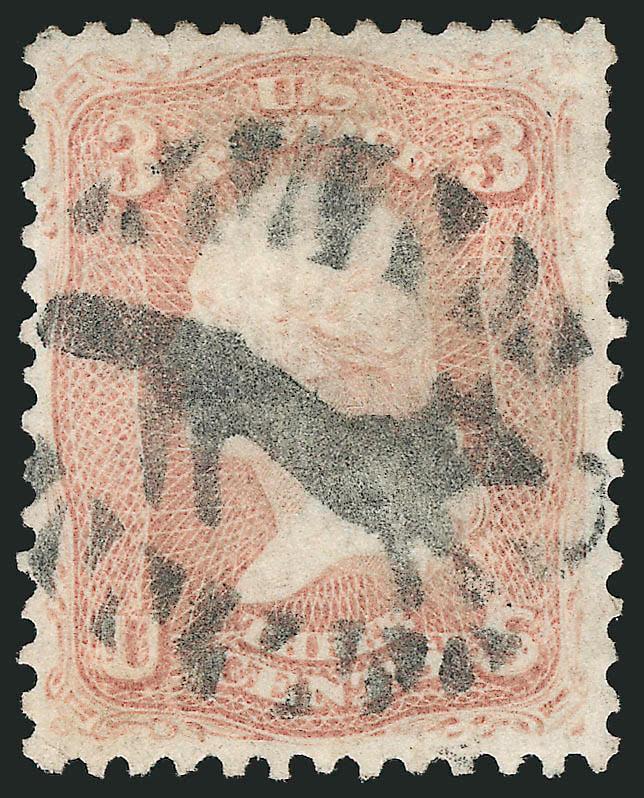
Dudley Fox (1823-1889), a silversmith, built the house at 177 Naubuc Avenue in East Hartford in 1854. He then constructed a factory to the north were he manufactured silver plated ware. Fox served as the Hockanum postmaster from May 12, 1865, through November 27, 1867 and used a fancy stamp cancellation marking in the form of a Running Fox. (for more information see “Dudley’s Fox” by W.J. Duffney). Business did not go well and in 1869 Fox sold the house to his son-in-law. (more…)

Richard Coan House (1841)

Richard Coan House

Richard Davis Coan built the house at 15 Fair Street in Guilford around 1841. He married Flora Hitchcock Granniss. Richard Coan is described in New England Families, Genealogical and Memorial, Vol. III (1913):

He spent the greater part of his life in the place of his birth, and being a builder by occupation erected many houses and public buildings there. Later he removed to New Haven, where he was actively engaged in the building business, a member of the lumber and manufacturing firm of Lewis & Beecher Company, who conducted large planing mills, and was one of the leading industries of the city. He was known by the title of major, commanding the Guilford troops on muster day. He was very prominent in the work of St. Paul’s Episcopal Church, and later in the Church of the Ascension, and being a musician of note was active in the choirs of both churches. After his removal to New Haven. Mr. Coan built a fine residence on Wooster street, which was at that time the finest residential section of the city.

The house in Guilford was later owned by Beverly Monroe, who ran a store on Boston Street established with his father and brother.

Storrs Hall House (1834)

Storrs Hall House

At 104 East Avenue in Norwalk is a brick house built c. 1834 by Henry Selleck. By 1847 it was the residence of Storrs Hall A.M., who ran the English & Classical School in the house. He is described in Norwalk (1896), by Rev. Charles M. Selleck:

Dr. Hall graduated at Middlebury College, Vermont, and afterwards engaged in academic work in Connecticut. He was the brother of the learned Edwin Hall, D. D., the pastor for twenty-three years of the First Congregational Church in Norwalk, in which town Dr. Storrs Hall established a private of school of high grade, and remained for a number of years its able and successful head. He subsequently studied medicine at Yale University, New Haven, and leaving the east established himself as a physician in Rosendale, Wis. In 1860 he was elected a Trustee of Ripon College, Wisconsin, and four years later chosen Secretary of the Board of Trustees of the same institution. His life has been spent along scholastic lines, and he is now, at the age of four and eighty, industriously engaged in professional work.