The David Welch House (1756)

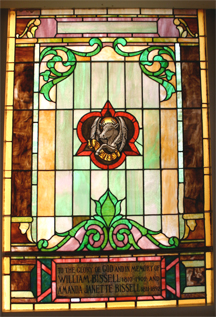
Milton, a village in Litchfield, was settled in the mid-eighteenth century. David Welch arrived in Milton from New Milford in 1753 and established a puddling furnace for refining the pig iron brought from Salisbury. The furnace was on Shear Shop Road, located behind the saltbox house, at Potash and Milton Roads, which Welch built in 1756. Welch, who also bought and sold the iron ore mined in northwestern Connecticut, later constructed an addition, for use as a store, on the eastern end of his house. Welch did business with Ethan Allen, the Revolutionary War hero, and later served as a major in the War himself. Welch moved into another house in Milton in 1784, where he died in 1815. His original house was later owned by William Bissell, from 1860 to 1902. Bissell was a farmer, house painter and captain in the Civil War. The house was also used for many years as a parish house by the neighboring Trinity Episcopal Church. There is a pdf document available with additional pictures of the house’s exterior and interior.

Whitneyville Congregational Church (1834)

The Whitneyville Congregational Church was built in 1834 in the manufacturing village of Whitneyville, in Hamden. The congregation began as the East Plains Congregational Church in 1795. It’s original meetinghouse on Dixwell Avenue was replaced by a new church, built after much debate, in a new location, next to the Cheshire Turnpike (now Whitney Avenue), on land donated by the widow of Eli Whitney. The Greek Revival structure was inspired by the designs of architect Ithiel Town. The church was enlarged by Rufus G. Russell, a former assistant of Henry Austin, with a pulpit recess in 1867. The dome atop the steeple was added by the end of the nineteenth century.

Middle Haddam Public Library (1799)

The building which now houses the Middle Haddam Public Library was originally built as a store by Cyrus Bill and Daniel Tracy. Tracy was a master carpenter who also owned a shipyard. He soon left the partnership and was replaced by Seth Overton. The gambrel-roofed structure continued as a commercial establishment until 1825 and then became a residence. In 1908, it was donated by Delia Rounds to the library committee.
(more…)

Elisha Leavenworth House (1845)

Waterbury industrialist Elisha Leavenworth built a Greek Revival house facing the Green in 1845. He moved in with his new wife, Cynthia Fuller Leavenworth, who died in 1854 with her infant child. According to The Town and City of Waterbury, Vol. II (1896):

[Leavenworth] entered into partnership with his father in the drug business, under the firm name of F. Leavenworth & Son. In 1850 he took Nathan Dikeman, Jr., of Northampton, as a partner, and the firm became Leavenworth & Dikeman, and so remained until its dissolution in 1890. […] Soon after the partnership with Mr. Dikeman was formed Mr. Leavenworth ceased to take an active part in the business, and devoted himself to his other interests. On his father’s death, in 1840, he succeeded him as postmaster, and held the office until 1849. He held the same position again, from 1853 to 1861. He represented the town in the legislatures of 1863, 1864, 1867, 1868. In 1875 he was elected judge of probate, and again in 1877 and 1878. He was for many years the acknowledged manager of the Democratic party in the town. He was the largest contributor to the Industrial School building, having given $10,000 for this purpose. Leavenworth hall was named by the managers in recognition of the gift. He was the first president of the Dime Savings bank.

Elisha Leavenworth, who never remarried, left his house, upon his death in 1911, to the Waterbury Girl’s Club. That year, a Masonic Temple, now part of the Mattatuck Museum, was built on the site of the house, which was moved nearby to 35 Park Place. The Girls Club is now known as Girls Inc.