Josiah Wright House (1799)

Around 1799, Simeon Wright made significant changes to a house originally built in the 1760s on Main Street in Wethersfield by his father, Josiah Wright. The alterations, perhaps influenced by the construction of the nearby Robbins and Bunce Houses, updated the home in the Federal style by the addition of semicircular windows. He also added a new gable roof, which allowed a larger attic. The Joseph Wright House, now a business, forms part of a row of three Wright family houses, which includs the David Wright and Ashbel Wright Houses.

(more…)

The Hale-Rankin House (1789)

hale-rankinhouse.JPG

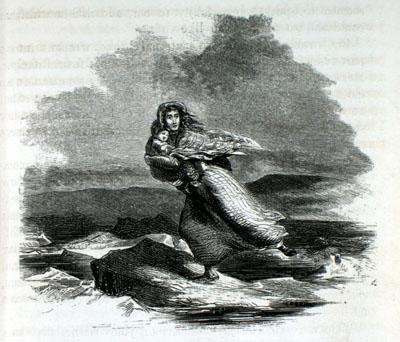
Earlier believed to have been built by Andrew Hale around 1754, with alterations made later in the Federal-style, the Hale-Rankin House is now thought to have been built in the Federal style in 1789. Located on Main Street in Glastonbury, it was built by Benjamin Hale and was later owned by the Reverend Samuel Rankin in the nineteenth century. Rankin was an abolitionist who told stories of people fleeing slavery by crossing the ice on the Ohio River. These stories influenced Harriet Beecher Stowe‘s story of Eliza crossing the ice in Uncle Tom’s Cabin. The house’s doorway is featured in Plate XXIV of Frederick Kelly’s Early Domestic Architecture of Connecticut. Post Edited 5/27/08.

South Glastonbury Public Library (1828)

southglastonburylibrary.JPG

The building on High Street in Glastonbury, which is currently the home of the South Glastonbury Public Library, was originally built in 1828 as a Methodist Church. Constructed by Parley Bidwell, who also built Glastonbury’s first Town Hall, the church had separate entrances for men and women. In the 1860s, the building was used as an unofficial African-American church and anti-slavery rallies were held there. By 1910, the local cotton mills had closed and the Methodist congregation had greatly decreased. The building was sold and used only for summer services until 1927, when the South Glastonbury Library first opened. At that time, the building was owned by Mrs. Helen Walsh Thompson, who allowed it to be used as a library for a nominal fee until 1941, when she gave it to the South Glastonbury Library Association.