Jonathan Root House (1720)

The oldest house in Southington is the Jonathan Root House at 140-142 N Main Street. It was built in 1720 and Jonathan Root later kept a tavern in the house. When Southington became a town in 1779, Root was chosen as one of the First Selectmen. He was also a member of the Committee of Correspondence during the Revolutionary War. According to local tradition, George Washington stopped at the tavern in 1780. Extensive additions were later made to the house and the rear roof slope was raised in 1942, but these changes have now all been removed. The house, which today is used as lawyers’ offices, no longer has its original central chimney.

Josiah Cowles House (1750)

Captain Josiah Cowles was one of the earliest settlers of Southington. Born in Farmington in 1713, he settled in Plantsville around 1740, serving as a justice of the peace and a captain in the local militia. In 1774, he served on a committee to collect supplies for the relief of the people of Boston. He died in 1793 and is buried in Quinnipiac Cemetery. His house, at 184 Marion Avenue in Plantsville in Southington, was most likely built around 1750, two years after Capt. Cowles married his second wife. The house, which is now a bed & breakfast, has a large rear addition dating to 1988.

Cooke’s Tavern (1789)

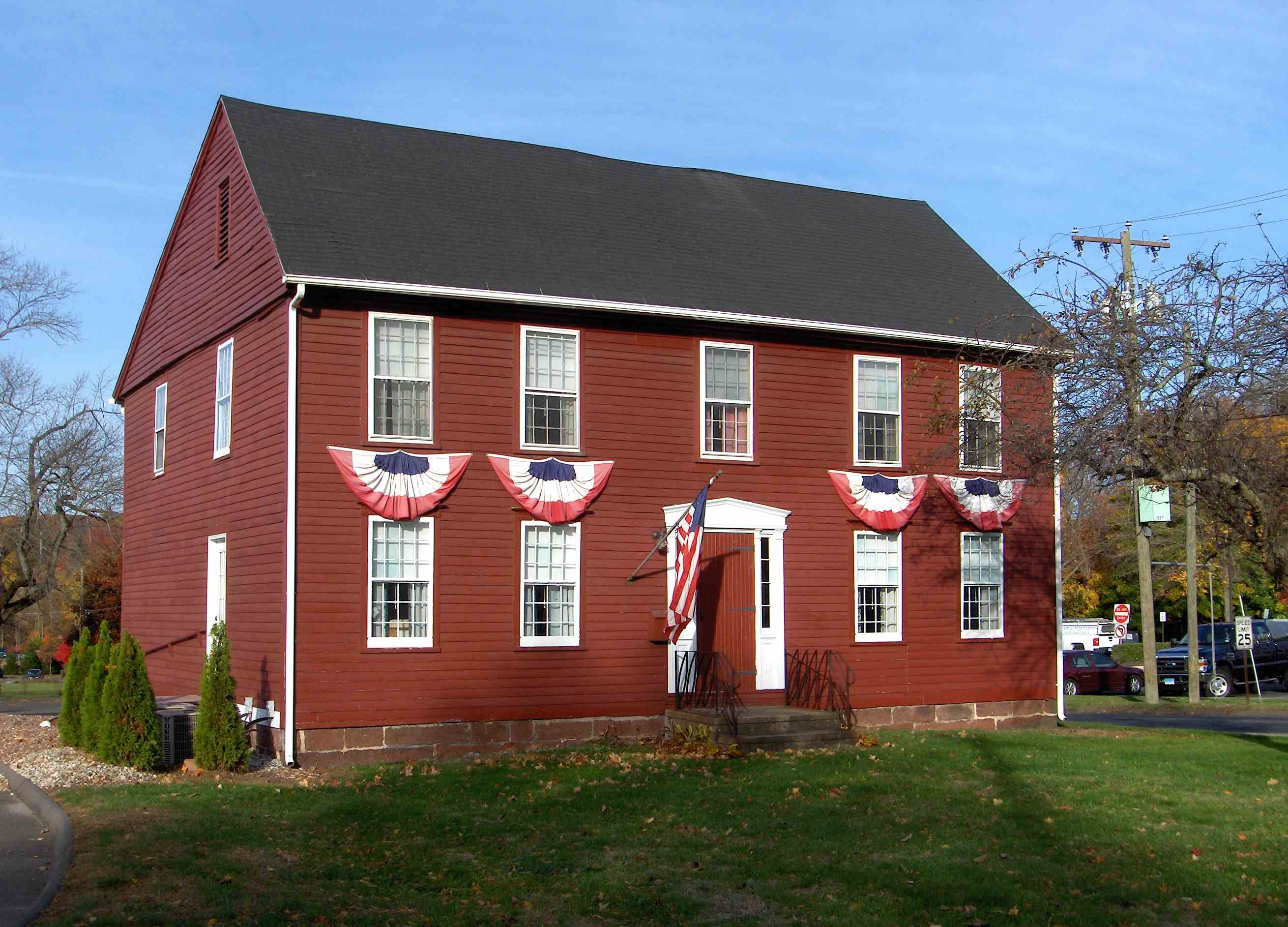
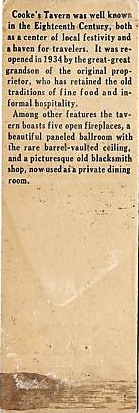
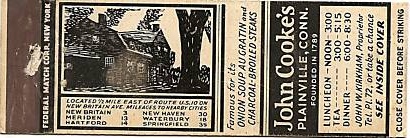
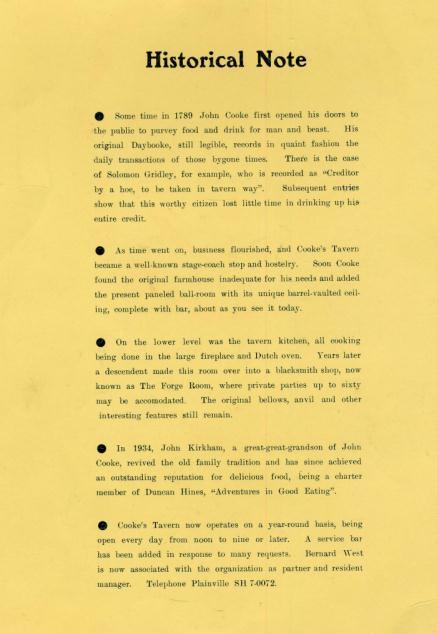
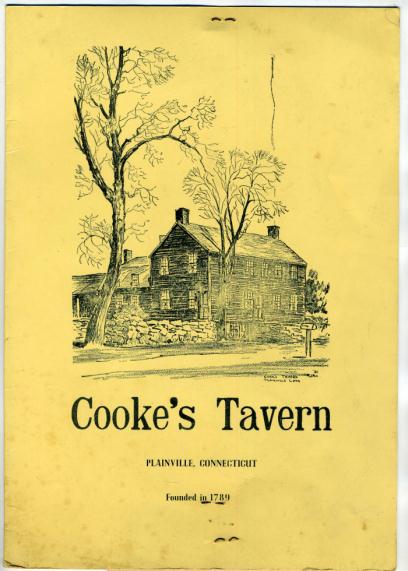
In 1795, John Cooke purchased property (current address: 143 New Britain Avenue in Plainville) from Luther Shepard of Farmington and constructed a house/tavern (or was it already built in 1789?) for travelers along the Old College Highway. Originally it contained six rooms and a ballroom, but the building was much added to over its years as a tavern. The basement kitchen was later used as a blacksmith’s shop until 1880 and the old forge remains. In 1934, a great-great-grandson of John Cooke reopened the old tavern as a restaurant called Cooke’s Tavern. Today, the tavern is home to a restaurant called J. Timothy’s Taverne.

John Wiard House (1754)

Off Route 4 in Burlington is a house built on a tract of land soon after its purchase by John Wiard, Jr. (1720-1788) in 1754. It was later passed to his son, Seth Wiard and then to Seth Wiard, Jr. The house is notable for having many well preserved eighteenth-century exterior and interior details, as well as Federal-style interior alterations made about 1810. Now set back from the road, the house’s front driveway, parallel to Route 4, marks the road’s original location, before it was moved to the south.