Avery Point Lighthouse (1943)

avery-point-light.jpg

The last of Connecticut’s active lighthouses to be built was the Avery Point Light, which today is located on the University of Connecticut’s Avery Point campus. The lighthouse was built in 1943 as a memorial to all other lighthouses and lighthouse keepers. It was not lit until 1944, owing to fears of enemy invasion by sea during World War II. At time it was built, the property was used as a Coast Guard training facility and the light remained an active aid to navigation until the Coast Guard moved to a new location in 1967. Left abandoned, there were concerns that the light would be torn down, especially after UCONN declared it a safety hazard in 1997. In response, the Avery Point Lighthouse Society was formed to restore and relight the tower. In 2001, the old wooden lantern was removed, to be replaced by a newly crafted replica, lowered into place in 2005. Part of the restoration involved the building of a memorial brick walkway, with inscribed bricks that had been sold to raise donations for the restoration. Work on the tower itself was begun in 2003 and the official relighting and rededication ceremonies took place in 2006. There is a webcam view of Avery Point.

Booth & Dimock Memorial Library (1913)

coventry-library.jpg

The library association in Coventry was formed in 1880. With help from a donation (requiring a matching sum from the town) from a wealthy California doctor, H. G. Cogswell, who had been cared for as a homeless 10-year-old by a woman from Coventry, the Library found a home in 1894 in a small former-Post Office building. The current library, known as the Booth & Dimock Memorial Library, was built in 1912-1913. Construction was funded by a bequest from Henry Dimock, a New York lawyer born in South Coventry, in memory of his grandfather, Rev. Chauncey Booth, minister of Coventry’s First Congregational Church, and of his father, Dr. Timothy Dimock. The old Greek Revival-style Thomas Clark Homestead, which had previously stood on the property, was torn down in 1911, amid much controversy, to make way for the new library. The Georgian Revival library building was designed by James M. Darrach of New York. A modern addition was constructed in 1987-1989, with a duplicate of the architecture of the old front facade being reproduced on the side of the building facing the expanded parking lot.

Simsbury Free Library (1890)

simsbury-library.jpg

The Simsbury Free Library began on the second floor of the Hopmeadow District School in 1874. Amos Richards Eno, the Simsbury-born Real-Estate Tycoon, had given the Library a large endowment and later provided the land and funds for the construction of a library building. Built in 1890, the Library was designed by Melvin H. Hapgood of Hartford in the Colonial Revival style. Eno’s daughter, Antoinette Eno Wood, donated the rear addition of 1924. The Simsbury Public Library was established in 1986 in a new building and the old Simsbury Free Library building was renovated and now contains the Simsbury Genealogical and Historical Research Library and the William Phelps Eno Memorial Center.

Mystic Seaport Lighthouse (1966)

Mystic Seaport is a living history maritime museum, which recreates a nineteenth century seaport. One of the museum buildings is an exact replica of the current lighthouse at Brant Point on Nantucket. The first lighthouse at Brant Point was built in 1746 and has been followed by many successive structures over the years. The present light, which is the lowest above sea level in New England, was built in 1901. The Mystic Seaport replica lighthouse was built in 1966. Inside, it currently displays a multimedia exhibition about lighthouses, called Sentinels of the Sea (video). (more…)

Dr. Sheldon C. Johnson House (1842)

dr-johnson-house.jpg

The home of Dr. Sheldon C. Johnson of Seymour is located at the intersection of West and Church Streets. This intersection could be called “Doctors Corner,” because doctors lived in each home at the four corners. Dr. Johnson settled in Seymour (then called Humphreysville) in 1825. He married Hannah Stoddard, the daughter of Dr. Abiram Stoddard, and the couple at first lived in an eighteenth century house, located behind the home Dr. Johnson later built in 1842. Dr. Johnson continued practicing medicine in the area into his 80s. The couple’s son, Charles Napoleon Johnson, became a lawyer.

Storrs Congregational Church (1927)

storrs-congregational-church.jpg

The Congregaional Church in Storrs began as a the Second Ecclesiastical Society of Mansfield, separating from the First Congregational Church in Mansfield Center in 1737. The first meeting house was constructed in 1745-1746 at what is now the corner of North Eagleville Road and Route 195. A later church, built in the 1840s, replaced it and can be seen in many old photos of Storrs. The church was designed by builder-architect Edwin Fitch. It was here that the Second Commencement for the Storrs Agricultural School (which became the University of Connecticut) was held in 1883. That church was replaced by the current brick church, built in 1927. This church was built at the same location as its predecessors, in what was then the center of the campus. At the same time, UCONN purchased the Dunham Memorial Carillon and, not having a suitable tower to place it in, installed it in the church.

Beatrice Fox Auerbach House (1911)

beatrice-fox-auerbach-house.jpg

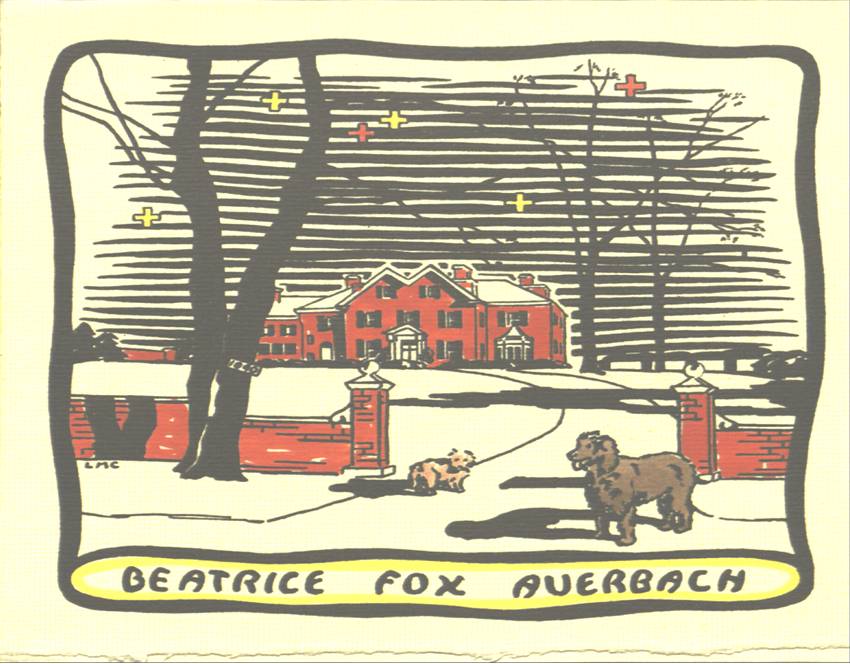
The residence of Beatrice Fox Auerbach, on Prospect Avenue in Hartford, was built in 1911 and was designed by the firm of LaFarge & Morris. Additions were made to the home in 1923. The Georgian Revival style house also features elements of the Tudor Revival, including the twin gables and a leaded casement bay window. Beatrice Fox Auerbach was the granddaughter of Gerson Fox, who in the 1840s had founded the store in Hartford that would evolve into the G. Fox & Company department store. Beatrice Fox‘s father, Moses Fox, succeeded his father as president of the company and Beatrice married George Auerbach, who eventually became the company’s secretary-treasurer. Her husband died in 1927 and after her father‘s death in 1938, she became the store’s president. Under her leadership, the company grew until it became the largest privately owned store in the country. She remained president until she sold her privately owned stock in 1965. Auerbach, who died in 1968, was also renowned civic leader and philanthropist. A biography by Virginia Hale has recently been published called A Woman in Business: The Life of Beatrice Fox Auerbach. In 1979 the house was given to the University of Hartford.