Sharpenhoe (1922)

Sharpenhoe is the name of a house at 132 Red Stone Hill in Plainville. This Colonial Revival home was built in 1921-1922 for Charles Hotchkiss Norton (1851-1942), a mechanical engineer and designer of machine tools. In the 1890s, Norton invented a heavy-duty cylindrical grinding machine capable of supplying machine parts for automobiles. The Charles H. Norton House was designed by Isaac A. Allen, Jr. of Hartford. As described in Modern Connecticut Homes and Homecrafts (1921): “this dwelling of red brick with garage attached is an exceptionally happy conception of the hip roof type of Colonial house with dormer windows. The design everywhere evidences a refinement of taste in the choice of its carefully considered decorative details.” Norton’s family continued to live in the house until about 1958.

The Mary L. Redfield House (1905)

The Shingled Colonial Revival house at 33 Mountain Road in Farmington was built in 1905 by the lawyer Robert L. Redfield for his aunt, Miss Mary L. Redfield. She had come to Farmington in 1892 with her brother Amasa. They lived in the Deacon Edward L. Hart House on High Street, until Amasa died in 1902. Mary Redfield soon moved to the new house on Mountain Road, where she lived with her friend, Miss Ada DeAngelis. Miss Redfield was struck by a car and killed in 1921. Miss DeAngelis continued to live in the house until 1932. In 1936, it became the home of Myron Clark.

Congregational Church Parsonage, Cheshire (1913)

On the site where the Parsonage of the First Congregational Church of Cheshire now stands, Dr. Thomas T. Cornwall once had a house, built in 1796. It later served as the office of another doctor, then as a tavern and store. Levi Munson, who began as a clerk at the store, purchased the property and ran it as a hotel for the next three decades. Munson’s son-in-law, Franklyn Wallace, then took over and operated the establishment until it burned down in 1892. Trolley barns then occupied the site until the church built the colonial revival-style parsonage in 1912-1913. No longer used as a residence for ministers, the church has recently been considering how to best make use of the property.

Clyde M. Hill House (1931)

One of the many Colonial Revival houses designed by Alice Washburn in the New Haven area is one at 105 Mill Rock Road in Hamden. Washburn was possibly inspired by the Canterbury style of Federal house, as seen in examples like the Prudence Crandall and Captain John Clark Houses in Canterbury. The house in Hamden was built in 1931 for Clyde M. Hill, professor of Secondary Education at Yale University.

Harwinton Congregational Church (1952)

Harwinton’s first Congregational meeting house was constructed in the early 1740s, to the south of where the current Congregational Church now stands. Surplus materials from its construction were later used to build the town’s first schoolhouse. Put to municipal use for thirty years after a new church was built in 1808, the old structure became dilapidated and was eventually torn down. The 1808 church, built in the Federal style, continued in use until it burned, after being struck by lightning, in 1949. Groundbreaking ceremonies for a new church occurred the following year and the building opened for worship in 1952. Due to a shortage of funds, the new church remained without a steeple for ten years, until 1962, when the Harwinton Congregational Church acquired the steeple of the Methodist Church in Torrington, which was being torn down at the time.

Litchfield County Courthouse (1889)

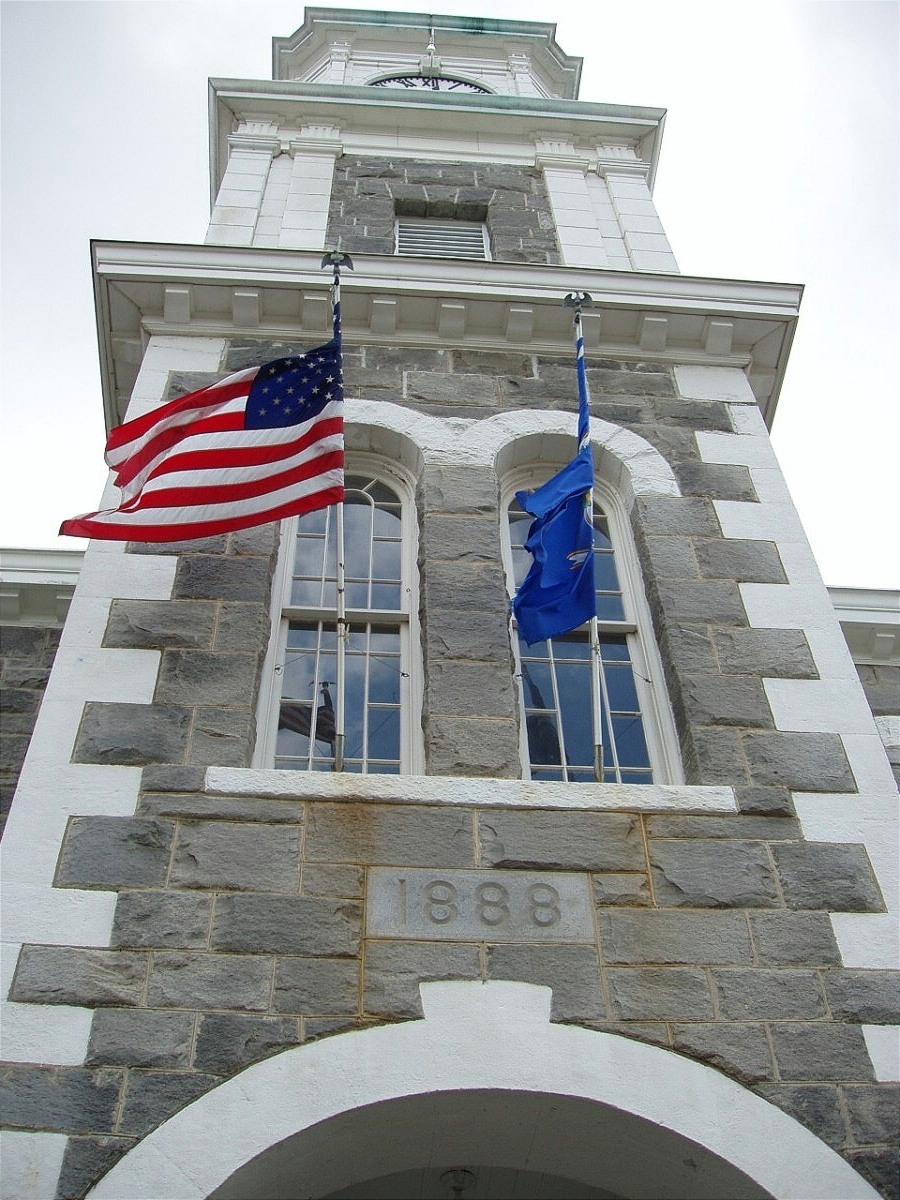
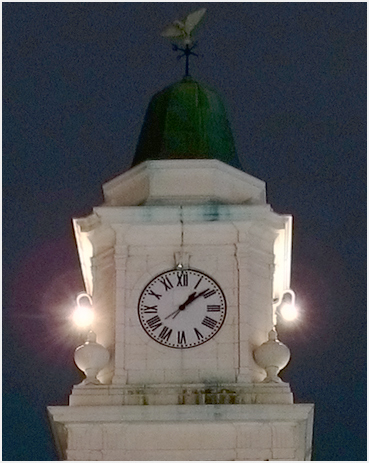
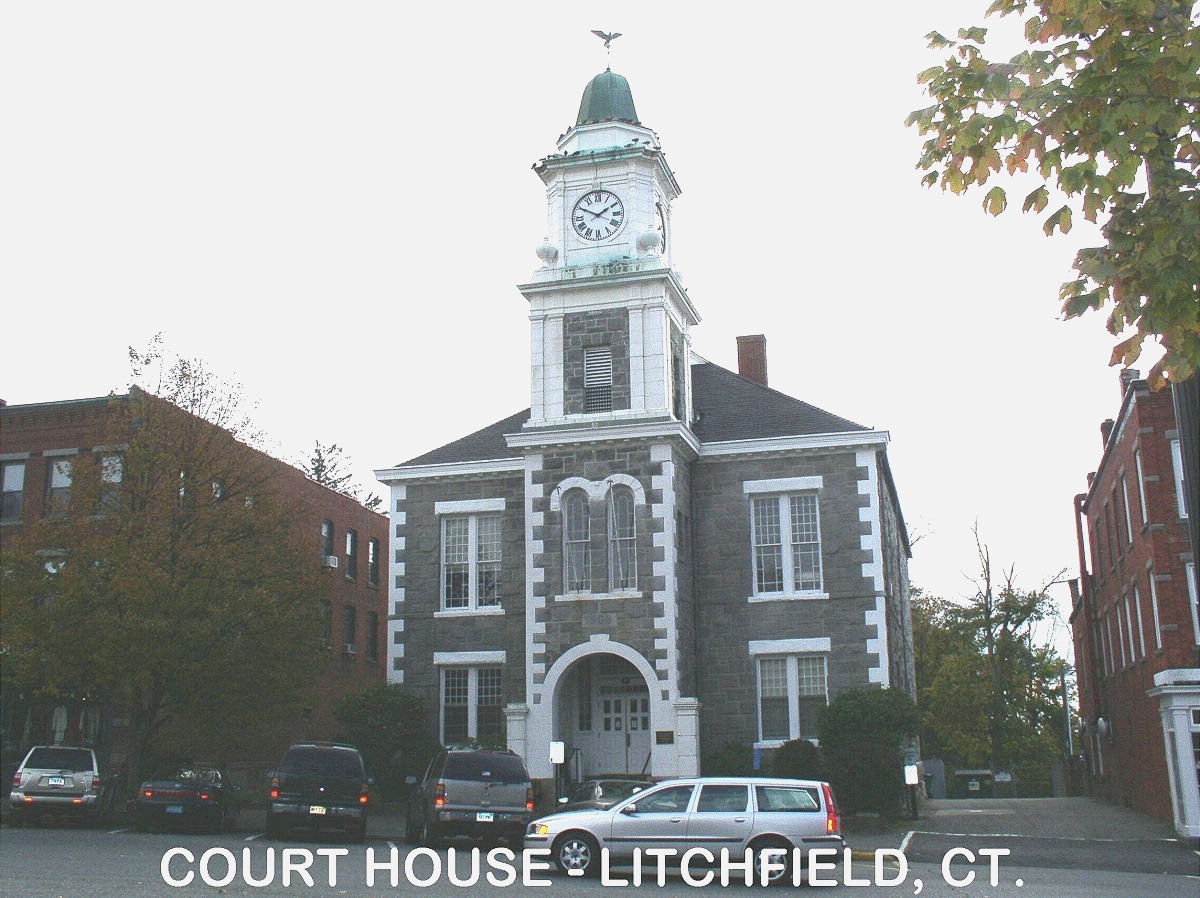
Four successive Litchfield County Courthouses have stood in the center of Litchfield. The first, built in 1752, was a plain building resembling a meeting house. The second, designed by William Sprats and built in 1797, was destroyed by fire in 1886. It was quickly replaced by a new courthouse, which also burned, just after its completion in 1888. Another new courthouse, designed by Waterbury architect Robert Wakeman Hill and constructed of Roxbury granite, was completed in 1889 in the Romanesque Revival style. As Litchfield embraced the Colonial Revival movement in the early twentieth century, a remodeling of the courthouse was undertaken in 1913-1914 to add space and also to better reflect the colonial character of the town. Georgian-style corner quoins were added to the structure and the original turreted tower was replaced with a new cupola. The building now serves as the Litchfield Judicial District Courthouse.