
The house at 500 South Brooksvale Road in Cheshire combines elements of the Colonial Revival and Craftsman styles. Known as Brookside, it was built in 1898 as a summer cottage for Peter Palmer of Brooklyn.
The house at 500 South Brooksvale Road in Cheshire combines elements of the Colonial Revival and Craftsman styles. Known as Brookside, it was built in 1898 as a summer cottage for Peter Palmer of Brooklyn.

The house at 108 Cornwall Avenue in Cheshire was built in the 1880s by James Gardner Clark. It was sold to James M. Speake in 1905 and then to Susan Hotchkiss in 1909. The house was used to board students of Cheshire Academy in the 1940s and 1950s.


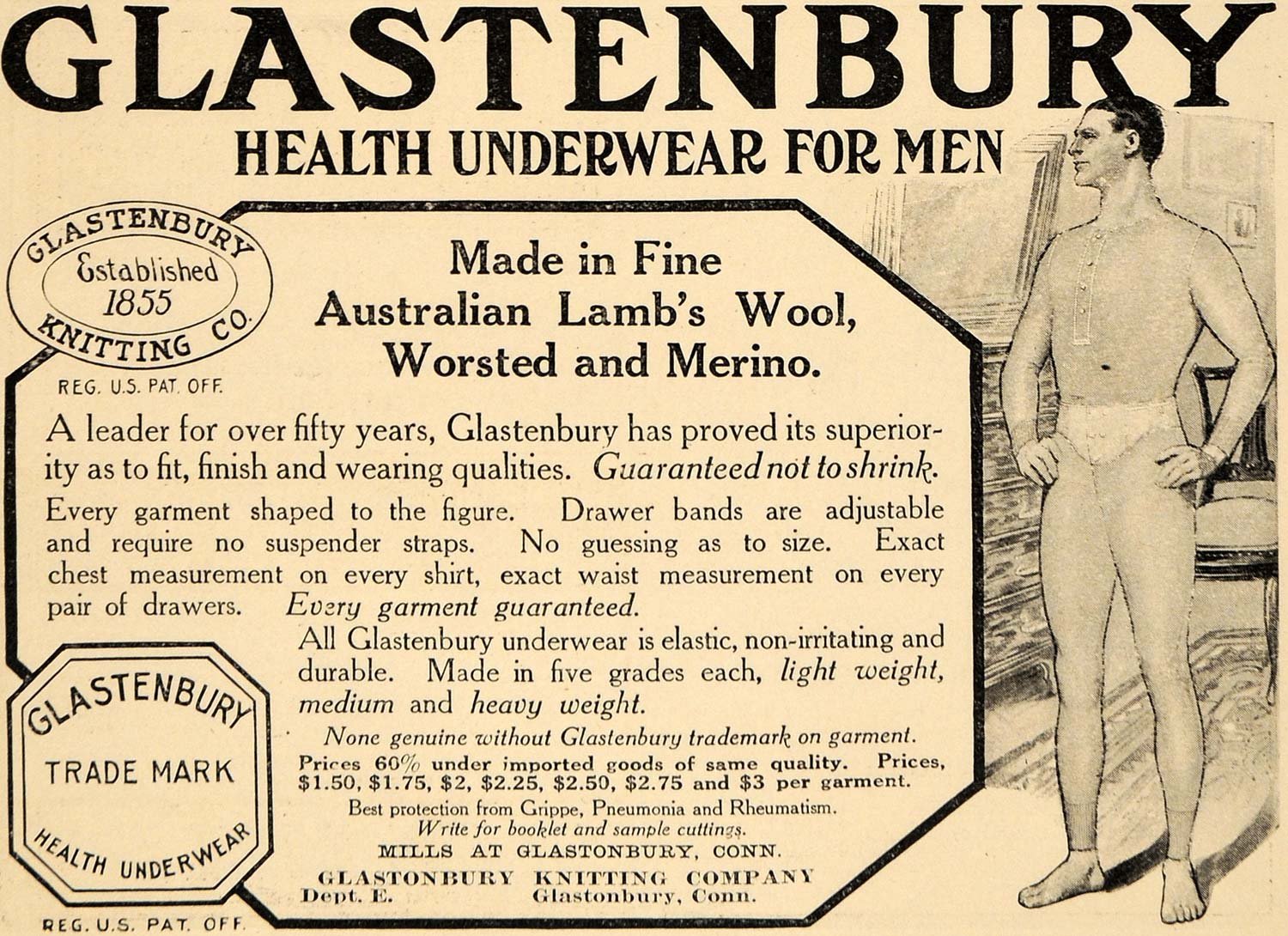
The two identical houses at 22-24 and 26-28 Addison Road in Glastonbury were built c. 1920 as mill worker tenements by the Glastenbury Knitting Company. The company, which manufactured underwear, used an older spelling of the town’s name. These tenement houses were built in the then-popular Dutch Colonial style, featuring gambrel roofs. The mill eventually sold off the houses in the 1930s.

The Post Office at 150 Main Street in Thomaston (pdf) was built in 1937 and was dedicated in 1938. The building features a WPA/New Deal-era mural, “Early Clock Making,” painted in 1939 by Lucerne and Suzanne McCullough, twin sisters from New Orleans.

The actress Katharine Hepburn (1907–2003) had long-standing connections with the Borough of Fenwick in Old Saybrook. Her parents, Dr. Thomas Norval Hepburn and Katharine Houghton Hepburn, who lived in Hartford, began spending their summers there in 1912. After the family’s original wooden Shingle-style cottage on Long Island Sound was swept out to sea in the hurricane of 1938, they built a new one of brick based on a design the family had modeled out of blocks and dominoes. The house, which covers about 8,000 square feet, was a frequent retreat for the actress, who eventually moved there to spend her final years. In the 1930s and 1940s, Howard Hughes would land his seaplane in the Sound, right in front of the Hepburn home. Katherine Hepburn shared the house with her brother, the playwright Richard Hepburn, who died in 2000. After Katherine Hepburn passed away in 2003, the house was acquired by the major New York City developer, Frank J. Sciame, Jr., who completely renovated the house in 2005 and put it up for sale. Although Taylor Swift came close to buying the house, Sciame took it off the market last summer because he had received no offers that matched the $30 million asking price. Sciame, who recently reduced the height of two granite posts at the end of his driveway from five to four feet after an extended legal drama with the Borough of Fenwick Historic Commission, will continue to use the house as a summer home. You can read more about the Hepburn “cottage” in Marion Hepburn Grant’s The Fenwick Story (Connecticut Historical Society, 1974), pages 171-179. Next month, a special exhibit will open at the Connecticut Historical Society in Hartford: Katharine Hepburn: Dressed for Stage and Screen, which runs until September 13, 2014. (more…)

Perhaps the most impressive of the Shingle-style summer houses in the Borough of Fenwick (pdf) in Old Saybrook is the one built in 1900 for Morgan Gardner Bulkeley. A legendary politician, Morgan G. Bulkeley was a four-term mayor of Hartford, 54th Governor of Connecticut (1889-1893), U.S. Senator, first president of Baseball’s National League and the third president of the Aetna Life Insurance Company for 43 years. Bulkeley lived on Washington Street in Hartford and was one of the leaders of the summer community of Fenwick, In 1899 he commissioned the Hartford architect, W.E. Becker to design his summer cottage at 5 Pettipaug Avenue in Fenwick. You can read more about the cottage in Marion Hepburn Grant’s The Fenwick Story (Connecticut Historical Society, 1974), pages 99-108. (more…)

This week the focus is on the Borough of Fernwick in Old Saybrook. A peninsula of land located where the Connecticut River flows into Long Island Sound, Fenwick was purchased in 1870 by the New Saybrook Company, with the financial backing of the Charter Oak Life Insurance Company of Hartford. The land was thereafter developed as a summer resort for wealthy citizens, many from Hartford. By 1899, when it was incorporated as a borough, the avenues of Fenwick were lined with numerous summer houses, referred to as cottages. There was also the Fenwick Golf Course, opened in 1896. The New Saybrook Company also constructed a large hotel at Fenwick, called Fenwick Hall. In 1887 the Charter Oak Life Insurance Company went bankrupt, and Fenwick Hall was acquired by Edward S. Stokes (d. 1901), who had connections with the New York City political machine and had famously shot his rival, James Fisk, in 1872. Stokes welcomed politicians and celebrities to the hotel. Following a tax dispute, the hotel was bought at auction in 1894 by Fenwick resident Morgan G. Bulkeley, former Governor of Connecticut. The hotel then served as a social center for residents of Fenwick and accommodated guests from the same social circle. Fenwick Hall burned in 1916, but its functions were taken over by the Riversea Inn, a Colonial Revival building at 20 Fenwick Avenue. The Riversea Inn had been built as a residence in 1885 and was remodeled into its present appearance around 1910. Since the 1950s, the building has again been a residence. You can read more about the Riversea Inn in Marion Hepburn Grant’s The Fenwick Story (Connecticut Historical Society, 1974), pages 67-75.
You must be logged in to post a comment.